2026 was definitely the year that Autodesk’s Forma-branded products garnered the majority of the attention in Autodesk’s large booth at AIA26 San Diego. The Forma AEC cloud and branding strategy seems to be finding many successes, but it will still take existing customers some time to adjust to rebranded products like ACC (Autodesk Construction Cloud), now being called Autodesk Forma.
Here is the way to think about how Autodesk is organizing its AEC products and services. They have them in three categories: Design, Simulate, and Manage. We are going to talk about what was shown or focused on at AIA26 in a moment, but briefly, products are organized like this:
- DESIGN — Forma Building Design, Revit, AutoCAD, and others
- SIMULATE — Forma Site Design, Forma Carbon Insights, and others
- MANAGE — Forma Data Management, Navisworks, and others
At AIA26 in San Diego, the business areas of Autodesk’s booth—based on our several visits to and by their booth—were focused on Forma Building Design, Forma Site Design, and other Forma-branded areas, including Forma Data Management, Forma Carbon Insights, Forma Design Collaboration, et cetera.
Meeting Autodesk at AIA26
Our primary visit to the Autodesk booth was to meet with Jesper Staahl, Senior Technical Marketing Manager at Autodesk, who was going to run us through Forma Building Design, including its newly launched schematic design model (LOD 200-300) and Revit integration.
MORE: Autodesk intros new Forma Building Design
Autodesk’s Forma Building Design is progressing at a reasonable pace. Jesper spent time reviewing the facade design capabilities that allow architects and designers to quickly and efficiently explore iterative facade design options. Despite being parametrically driven, there is a fairly decent amount of plasticity and flexibility in the tool with respect to openings. And architects can also push and pull the building’s facade levels backward and forward. I asked if parts of the facade could be organized into groups (think base level, mid level, and upper levels), and Jesper quickly showed that capability.

Autodesk’s booth was clearly heavily visited at AIA26 San Diego. This was the first time at AIA that the new Forma rebranding and integration of products were on full display.
Another thing Forma Building Design can do with respect to facade design is to analyze your facade’s impact on the building design by taking that model into Forma Carbon Insights. Technically, you are not “pushing or pulling” geometry data between these two tools because they operate on a single, continuous cloud data thread. Once you begin looking at the impact of your design work—and especially your facade design work back in Forma Building Design—inside Forma Carbon Insights, you can explore and benchmark energy impacts. As an architect, you can see where facade decisions are costing you energy costs, and you can then balance trade-offs between geometry and orientations as they inform your building design.
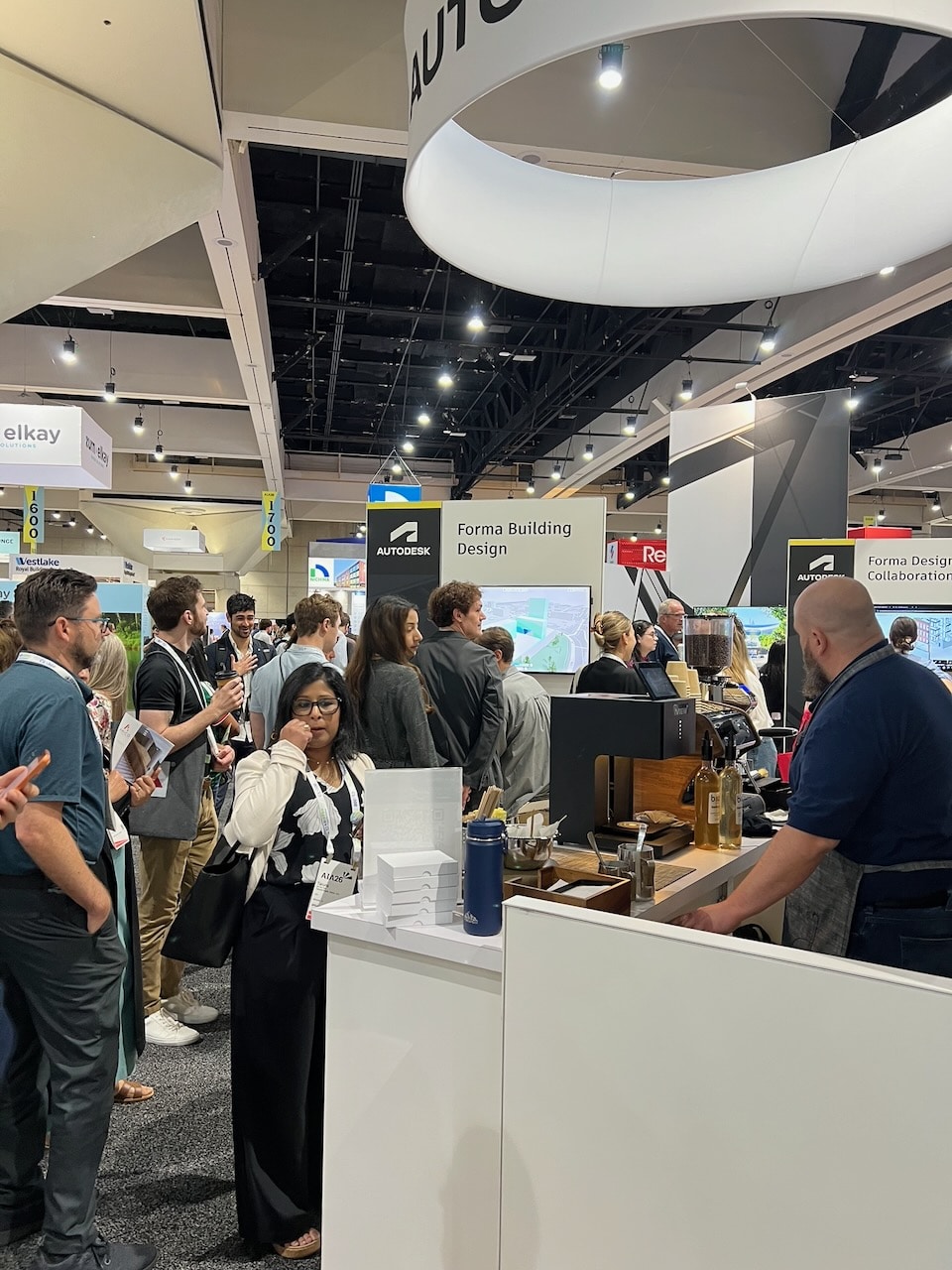
To our eyes, the Forma Building Design area (station) was the hottest area within the Autodesk booth space. Lots of architects and designers were learning about this relatively new product offering that ties into Forma Site Design and other Forma cloud solutions.
Forma Carbon Insights (formerly Autodesk Insight) can also connect to Revit models and do the same kinds of things it does in Forma Building Design, giving architects the capability to refine design based on energy and carbon impacts even after the design work has moved from Forma Building Design to Revit. What has been described is what Autodesk refers to as connecting Design to Simulate.
As for Forma Site Design, this product is more similar to the original Spacemaker.AI tool Autodesk acquired and from which it is based. This is your early-stage design and analysis tool from Autodesk, and the one you use before jumping to Forma Building Design. Forma Site Design helps you with your site and building planning (test fitting), starting with GIS-level real-world coordinates and site context via native ArcGIS data and enterprise sign-in.
MORE: AIA26: Architosh 12th ‘BEST of SHOW’ honors for digital technologies at AIA San Diego
Environmental analysis for the impact on sites that buildings make and how contextual buildings impact new buildings, Forma Site Design (formally just Forma), shows you sun and shadow impacts, daylight potential, noise analysis, wind analysis, embodied carbon, and more. All of those technologies are why we have awarded Autodesk Forma our BEST of SHOW award in past AIA national conferences.
Forma Site Design also features Forma Board for organization and presentations. Forma Site Design also dovetails with other Forma-branded products and other Autodesk tools like Revit and Dynamo. Third-party sector leaders like McNeel’s Rhino 3D are also connected.
Architosh Analysis and Commentary
Autodesk’s global AEC “Forma” brand is probably one of the smartest things it has done recently. While it will take existing users some time to mentally switch from old names, the unification reflects Autodesk’s master AEC strategic product plans. Earlier in the year, the company implemented the rebranding integration with ACC, fully joining the Forma environment. Even BIM 360 is now known as Forma Design Collaboration. (see, Architosh: “Autodesk Construction Cloud (ACC) is now Autodesk Forma,” 31 Mar 2026).
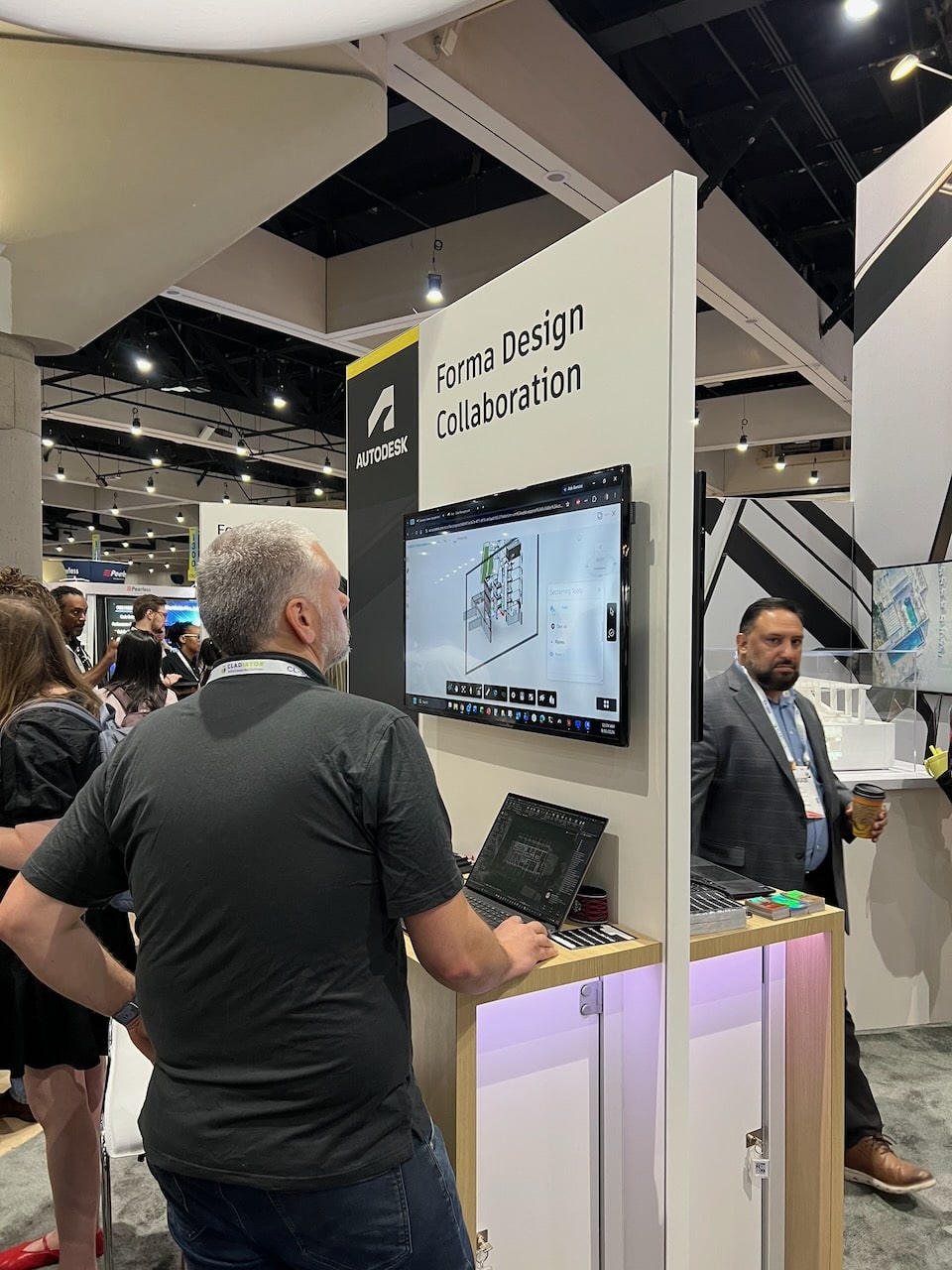
BIM Collaborate Pro (formerly BIM 360) is now Forma Design Collaboration. This application runs in the cloud (web browser-based) and connects multidisciplinary teams, data, and workflows during the design phase of the project. It supports automated clash detection, issue tracking, simultaneous editing, timeline packages, and more.
Aside from seeing this unified Forma rebranding presented to the North American architectural industry for the first time, it seemed to us that Autodesk’s booth had even more energy than it typically has each year. Architects were flocking around the Forma Building Design station, the Forma Site Design station, and other Forma Data Management, Forma Build, and Forma Carbon Insights stations. These areas were the hottest areas of Autodesk’s booth, signaling perhaps that the US industry is beginning to grasp Autodesk’s AEC future direction.
Other Show Reports
AIA26: Expo Show Report 1 — Autodesk
AIA26: Expo Show Report 2 — Nemetschek Group
AIA26: Expo Show Report 3 — Trimble and SketchUp
AIA26: Expo Show Report 4 — Chaos
AIA26: Expo Show Report 5 — neoBIM, and other AI apps
AIA26: Expo Show Report 6 — xFigura, CODii, others
AIA26: Expo Show Report 7 — Layer, Arcol, Egnyte and more…