Chaos is the subject of our 4th Expo Show Report for AIA26. At Architosh, we sometimes refer to Chaos as a member of the “big four software houses in AEC.” These large AEC software firms include Autodesk, Trimble, Nemetschek Group, and Chaos.
All of these firms have hundreds of employees and hundreds of software developers across numerous teams supporting a multitude of AEC industry digital tools. And Chaos, like those others just mentioned, also has professionals focused on expanding their firm through mergers and acquisitions. Everyone knows Autodesk regularly buys small firms, but do not be surprised to see all four of these companies, including Chaos, continue to acquire small tech companies, expand their product offerings, and drive synergies across their growing family of digital tools.
Chaos at AIA26
Chaos at AIA San Diego showcased their AEC industry visualization software solutions, as well as tools they have acquired over the past few years that are not visualization tools. These include tools like Chaos Glyph, a Revit plugin that automates and standardizes documentation tasks such as view and sheet creation, tagging, dimensions, and more. Chaos also has Morphis and Helix, which are non-visualization tools.
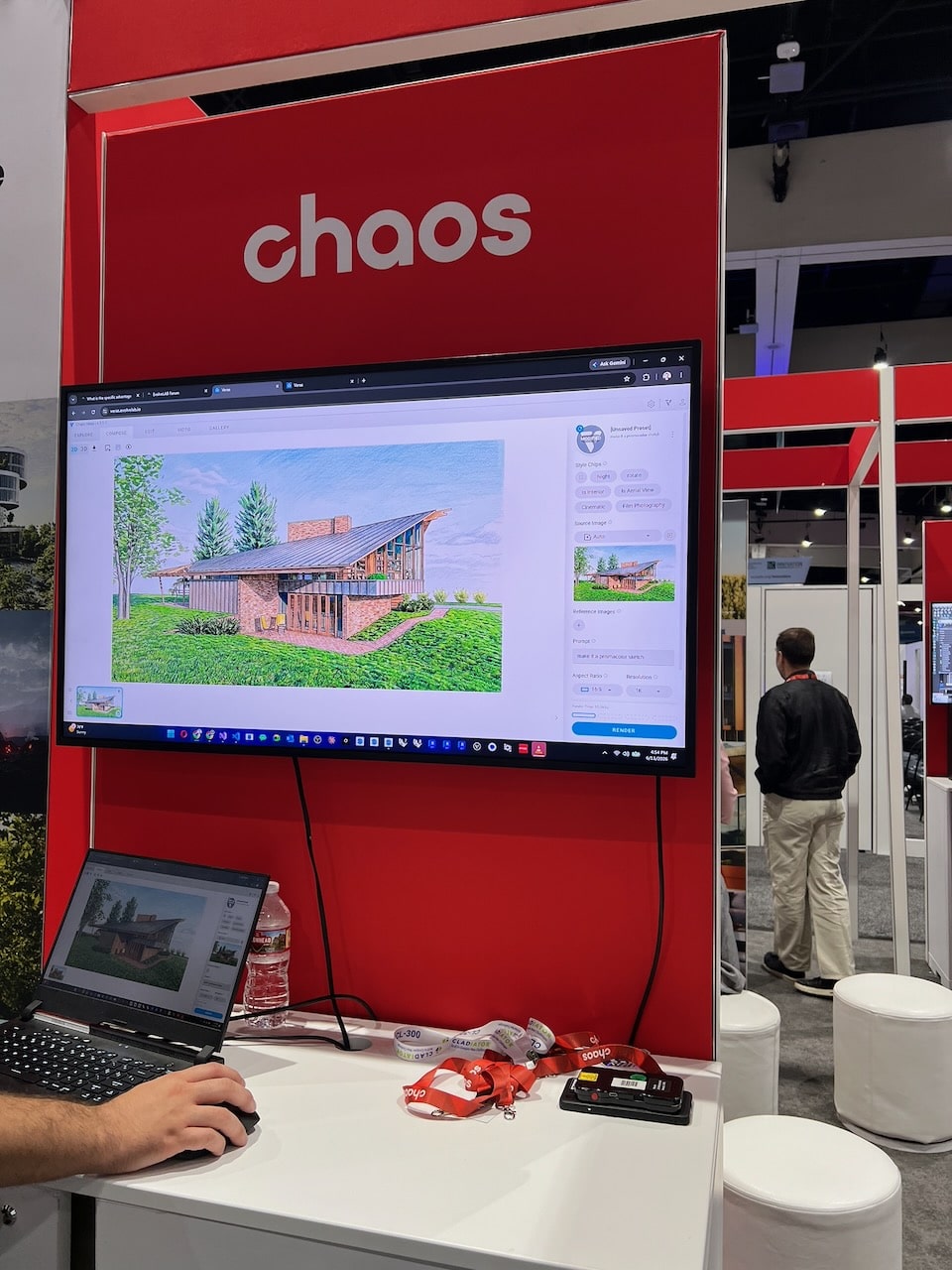
Watching a demo of Chaos Veras in action at AIA26.
Still, the story for Chaos at AIA26 was primarily focused on visualization, as that is what the company is known for.
Enscape
While Chaos’ most famous product is the legendary V-Ray renderer, the software firm based out of Germany is increasingly more well-known to architects for Enscape, its real-time, interactive renderer that works with literally every major BIM and 3D software platform. Enscape version 4.18, launched in May, is fully supportive of Autodesk Revit 2027, SketchUp 2026, Archicad 29 and Vectorworks 2026. There is also a new Chaos Envision live link so you can execute a one-click handoff from Enscape directly to Chaos Envision.
Another really interesting Enscape development is that the 2GB scene size limitation is removed. Enscape can now handle massive, complex project data without experiencing crashes. AI advancements are also visible to booth attendees looking at the latest, including AI material generation via AI inside the Enscape Material Editor via Chaos Cosmos. And users can upscale low-resolution images using Chaos AI Upscaler, and Architosh has already written about Veras AI integration across its product line before here.
V-Ray
Updates for Chaos’ most advanced renderer streamed out between June and July of this year, depending on the host application. V-Ray is still a dominant force—if not the dominant force—in archviz studios and agencies worldwide. V-Ray 7 was officially released in late June, after the AIA26 event in San Diego. And since then, there have been four updates. You can read our full report on V-Ray 7 Update 4 over here.
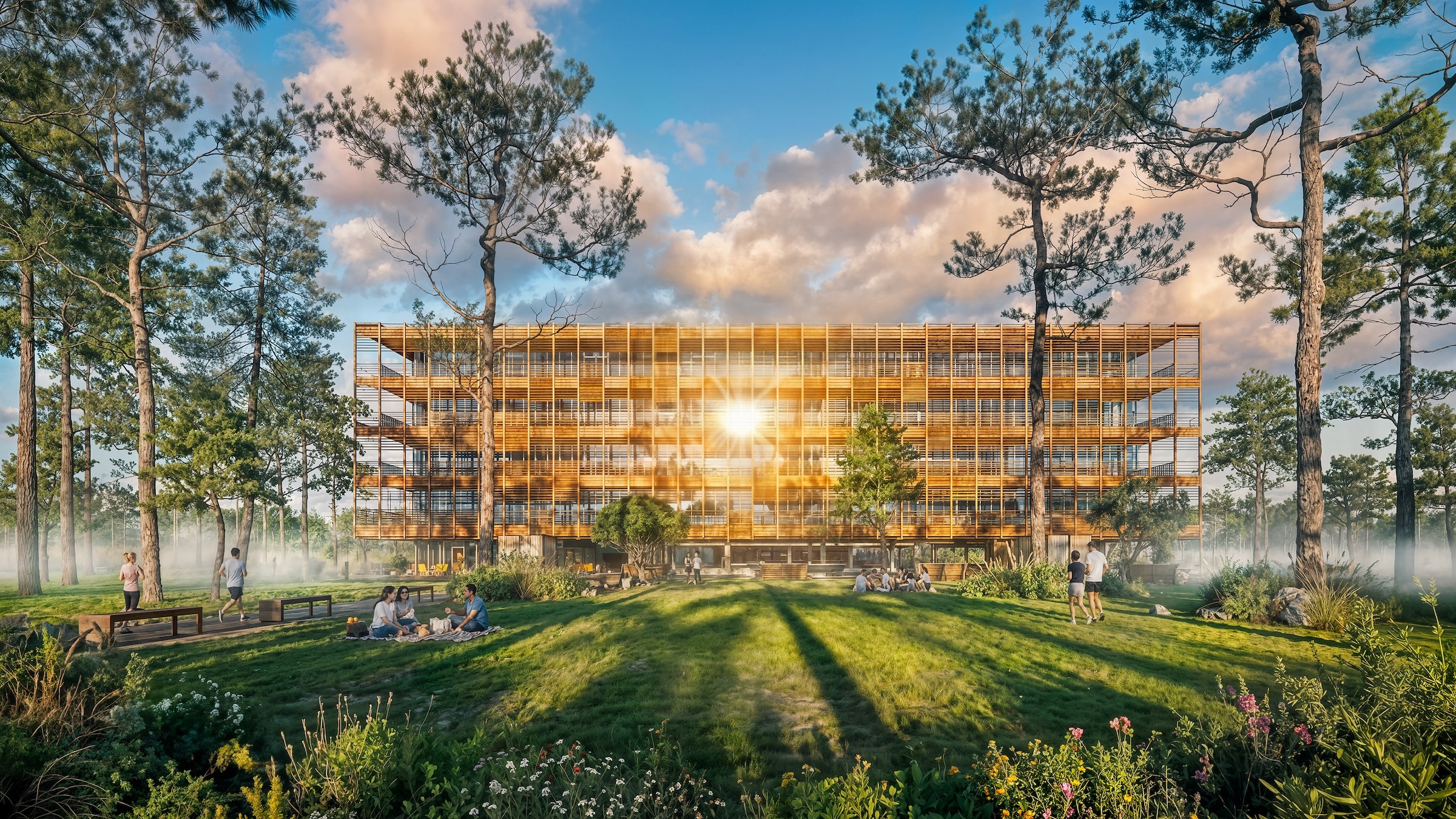
Veras is now fully integrated into all Enscape, V-Ray, and Corona renderer solutions.
Some notable highlights include GPU Caustics, which are now rendered on the GPU as an option. V-Ray Profiler analyzes your scene for what parts of the scene are taking the longest to render, compares the performance of different settings, and figures out the best settings for your scene. There is also Gaussian Splats support and more.
Corona
Chaos Corona 15 was released back in late May. A big new change involved the Veras AI engine embedded for free in all Corona subscription tiers. You can push a render frame from Corona directly to Veras to generate dozens of material variations, swap seasons, and create short animations on the fly. Global illumination (GI) has been improved for Corona’s Gaussian Splats support. Additionally, there are new Glint Layers in Corona’s physical materials editor to create accurate metallic flakes, sand sparkle, and snow glints.
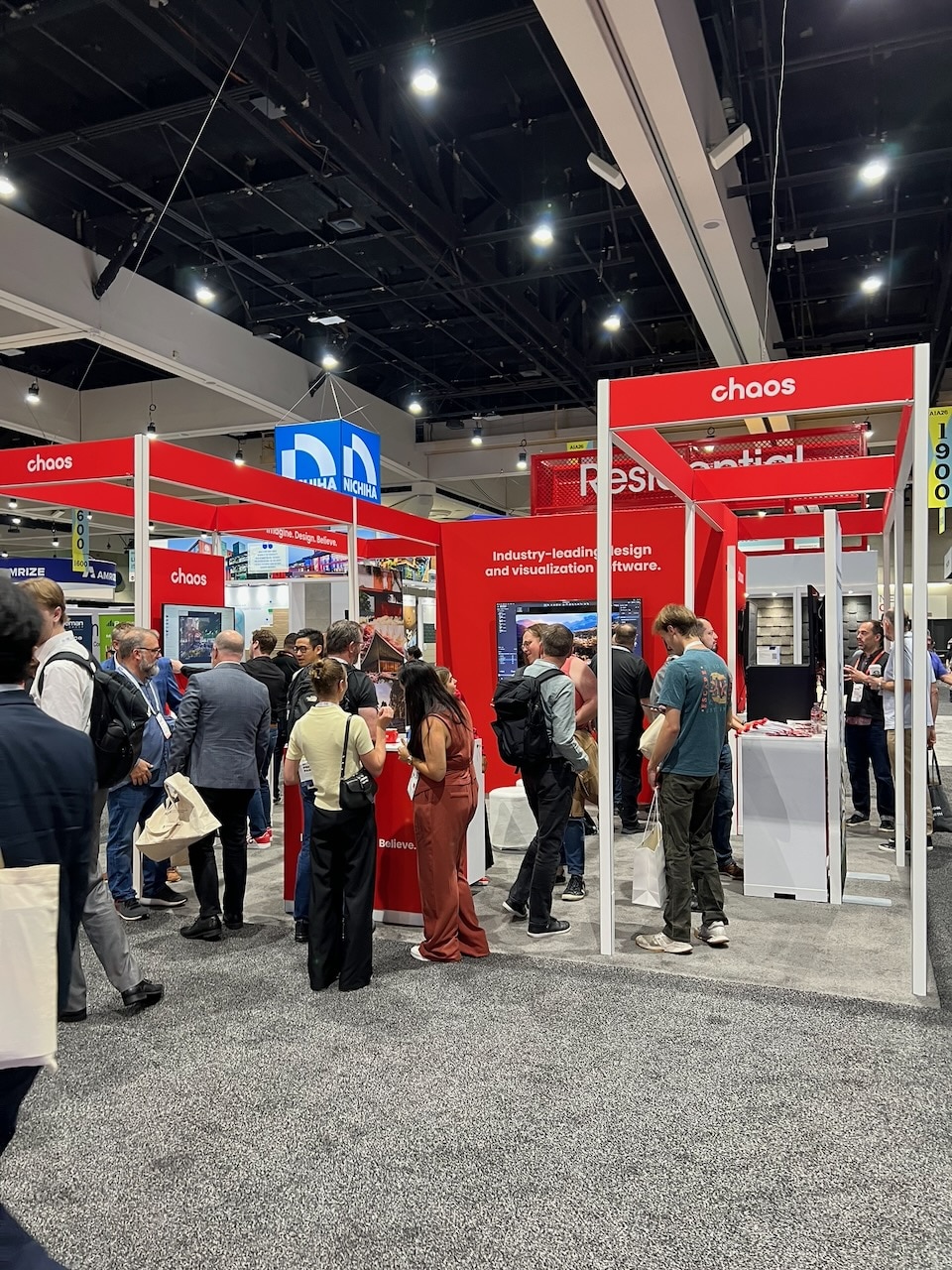
The Chaos booth at AIA26 had steady visitor flow checking out V-Ray, Enscape, Veras, and other key products.
MORE: Enscape, V-Ray, and Corona Get Veras AI Integration
New cloud streaming support allows clients to interactively walk through full 3D viewports or leave annotations on video animation sequences via a simple web link.
Veras
This year, Chaos integrated Veras into Enscape, V-Ray, and Corona renderers. Furthermore, our AIA25 Architosh BEST of SHOW winner in the Visualization Category and the Economics Prize award also integrated Google Nano Banana Pro with improved geometry fidelity, material realism, and lighting accuracy.
Working alongside a range of integrated Chaos products, Veras 4.0 also introduced brief animations from still images and can construct multiple perspectives from an initial view without the need to rebuild geometry. We were equally impressed with its ability to work from 2D drawings along with sketches to fashion compelling, polished 3D renderings and animations. We acknowledged that accelerating early-stage visualization with Veras is a force multiplier.
Other Show Reports
AIA26: Expo Show Report 1 — Autodesk
AIA26: Expo Show Report 2 — Nemetschek Group
AIA26: Expo Show Report 3 — Trimble and SketchUp
AIA26: Expo Show Report 4 — Chaos
AIA26: Expo Show Report 5 — neoBIM, and other AI apps
AIA26: Expo Show Report 6 — xFigura, CODii, others
AIA26: Expo Show Report 7 — Layer, Arcol, Egnyte and more…