(Abby Piper was a contributor to this article)
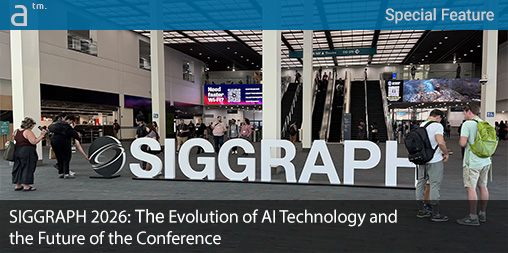
SIGGRAPH 2026 THIS YEAR WAS IN Los Angeles, California, on July 19th through July 23rd, 2026. The show had a very different atmosphere, being smaller. There are naysayers who will tell you there is a steady decline in attendance, but do attendance numbers give you a real sense of an evolving industry?
The exhibits were 6 booths deep and about 12 booths wide. Yet I found some gems worth knowing about. I think it is premature to calculate the success based on numbers on the exhibit floor, especially when you consider the Technology Papers, Technical Workshops, the Courses, Birds of a Feather, Production Sessions, Games Summit, and the private networking events throughout the conference. People still want to connect and see what new technology there is to offer. Is AI affecting attendance, or is it the downturn in the economy?
AI—The Focus
This year, there is a focus on AI for security and infrastructure, with workstations as a major topic. Windows, Linux, and Mac coexistence, GPU management, storage, monitoring systems, and cost control are part of a unified infrastructure. AI is expensive. Implementing it must be done carefully and with precision. Will studios and firms open their closed systems that were cut off due to protecting their data and IP?
Workstations will need to access tools on the web and many types of AI services with a new way to secure their infrastructure. AEC is not a focus of SIGGRAPH, but the technology is no longer about a profession. It is about identifying technological breakthroughs and products that can be valuable to architects, engineers, and construction professionals, as well as media and entertainment industry professionals.

NVIDIA was once again a major sponsor at SIGGRAPH in Los Angeles. The company highlighted its new NVIDIA RTX Spark superchip among other silicon technologies like its powerful GPUs for workstations and laptops.
In a time of chip shortages for CPUs, GPUs, and RAM, it is a good idea to explore new companies and technologies that have left a significant gap in the market, with a focus on data centers & AI. Generative AI is no longer trying to replace real artists or creators in the creative space after high-profile industry lawsuits. The focus is on tools to help artists to work more efficiently. Copyright law is clear about creating with the human hand and AI. This is why navigating this space is no longer just about what AI can do; it is also about setting boundaries. I wanted to talk about affordable technologies and solutions in a time of shortages, so M&E industry creatives and AEC professionals can discover new tools.
NVIDIA
NVIDIA was a major sponsor of the conference. NVIDIA has invested significant time and effort in developing technologies for data centers. A few of these technologies will help create pipelines in the creative space.
Lately, NVIDIA GPUs for the Pro market have been difficult to get, so I wanted to see what technology was available now or new. NVIDIA did a keynote discussing neural rendering techniques, world models, and simulation methods for AI.
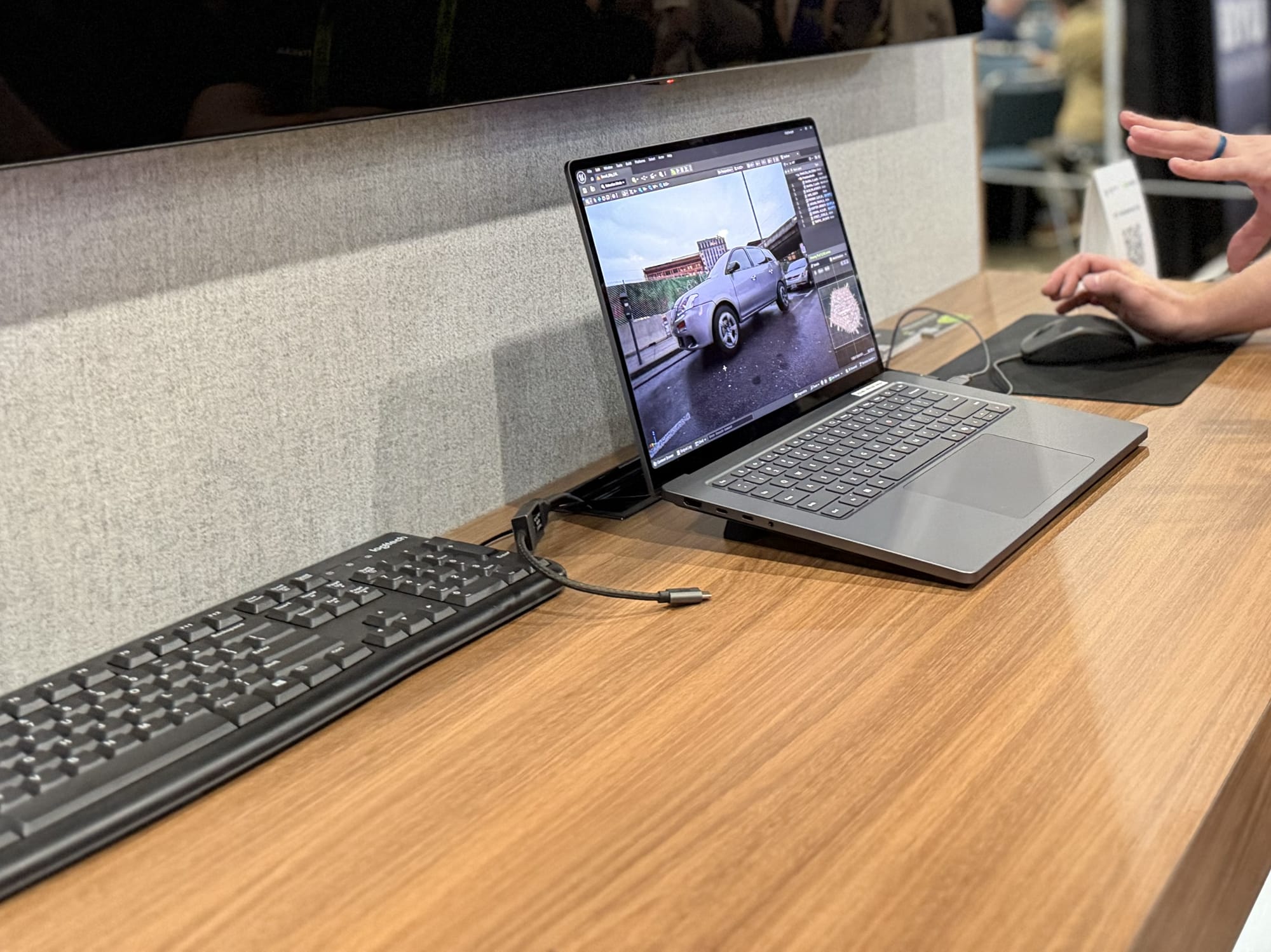
The NVIDIA RTX Spark superchip powers a sample OEM laptop running the Windows for ARM operating system. Architosh has written extensively about the significance of the ARM architecture in the broader computing landscape.
NVIDIA showed off its RTX Spark Superchip powering a Windows laptop, delivering up to 1 petaflop of AI performance. RTX Spark gives creators the power to render 90 GB 3D scenes, edit 12K 4:2:2 video, generate 4K AI videos, run 120B-parameter LLMs with up to 1 million tokens of context locally, and play AAA games at 1440p at over 1,000 frames per second.
MORE: NVIDIA unveils RTX Spark—ARM-based Superchip for Windows PCs
Adobe is re-architecting Photoshop and Premiere from the ground up for the Spark chip to double AI graphics performance. NVIDIA RTX Spark will be available from multiple PC makers in the fall. RTX Spark is also available as a standalone box.
NVIDIA RTX Spark laptop specs include:
- Up to 6,144 Core
- Up to 20 Core Grace CPU
- Up to 1 Petaflop GP4 AI Performance
- Up to 128 GB Unified Memory
- All-day battery life.
I watched an example at the NVIDIA booth: a large section of a city displayed in full high resolution, moving seamlessly without stutter on the new laptops. It can be a great option for smaller architectural firms looking for affordable GPU solutions. Moreover, the new NVIDIA RTX Spark Superchip laptops are battery-life comparable to Apple’s industry-leading laptops, giving creative professionals incredible processing performance all day long. These systems will be excellent for mobile professionals in M&E as well as AEC.
Autodesk
Autodesk had a booth on the show floor this year, focusing on its product FLOW. If you are using humans or characters in your scenes.
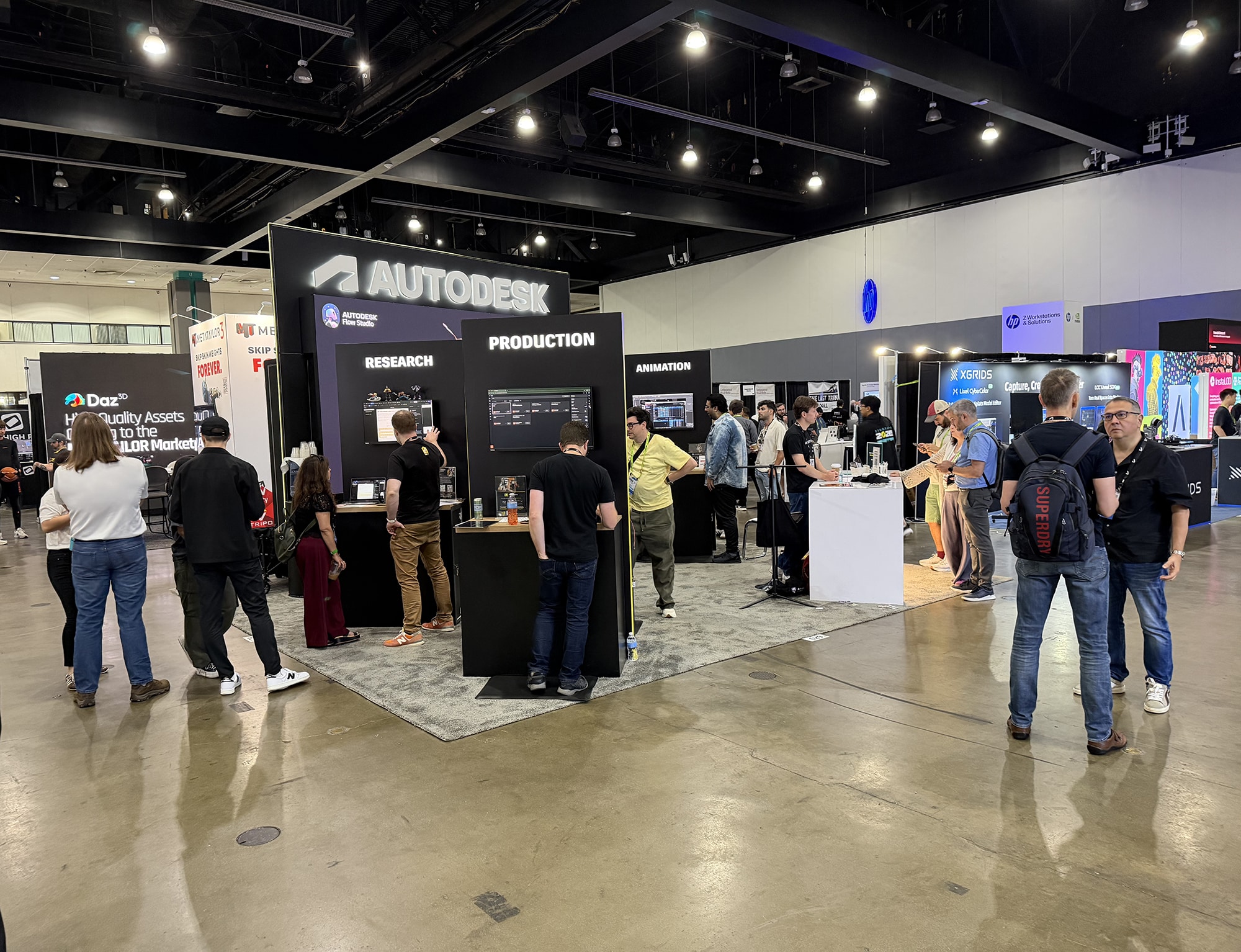
The Autodesk booth was focused on FLOW and, of course, Autodesk Maya. Maya continues to be a dominant tool in the M&E industry, but it has long since been of serious interest to AEC visualization professionals.
FLOW was demonstrating the latest AI-powered tools in FLOW and Maya, making creation more efficient, as well as other updates to their full creative suites. Autodesk featured their Vision series in a huge conference room with projects using the new AI workflow from different major companies like Riot Games, Industrial Light and Magic (ILM), Framestore, and more.
Autodesk University will be the focus of the AEC industry, so please look for this report in September.
TRIPO
Tripo is a new company focused on general-purpose artificial intelligence. Tripo is a native generative platform and a series of AI 3D foundational models. Tripo wants to democratize creativity for creatives worldwide, enabling them to create, experience, and interact with high-quality spatial content.
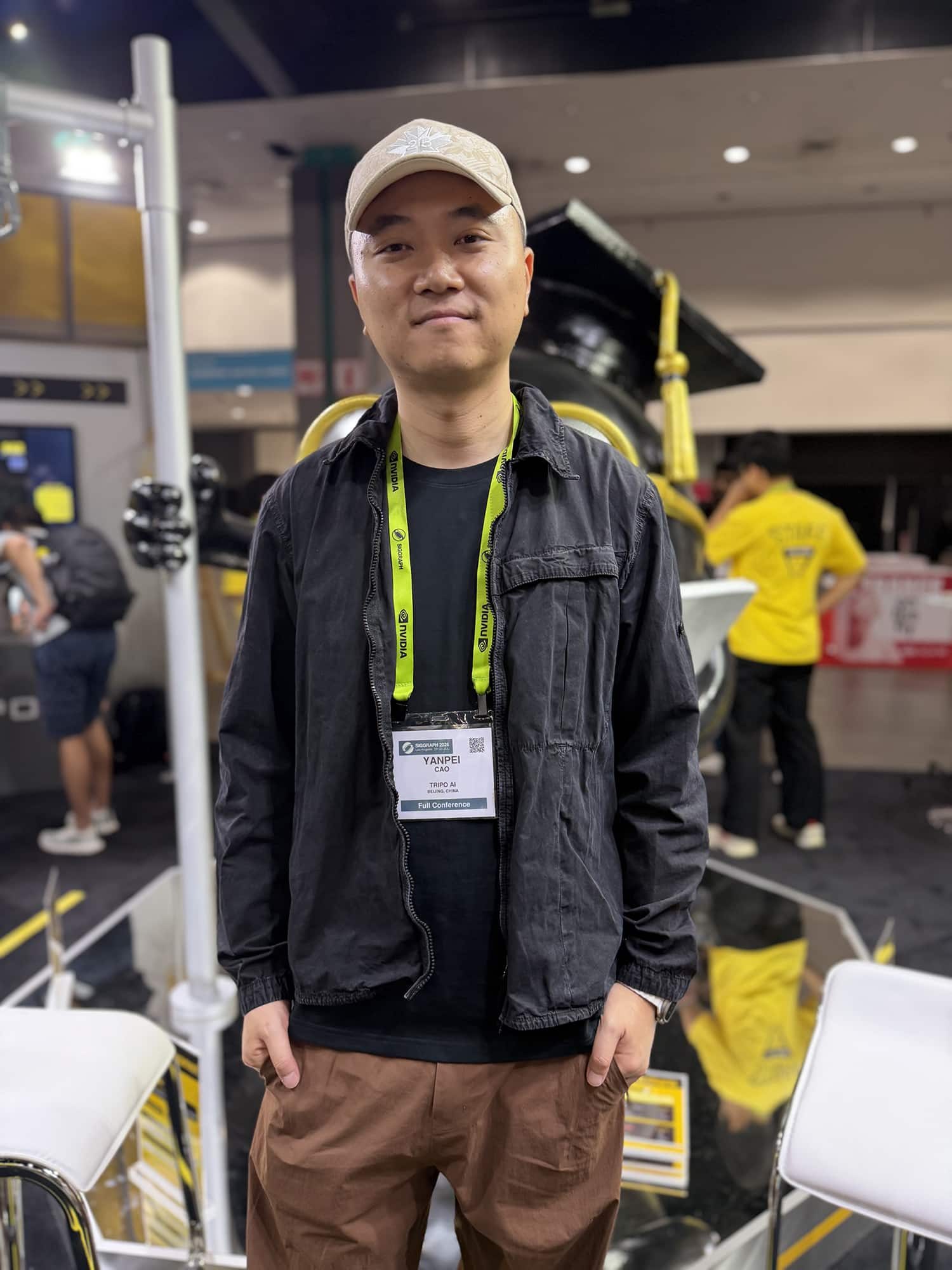
TRIPO chief scientist Yanpei Cao.
Chief scientist Yanpei Cao spoke about the company’s clear direction and business model, explaining how simplified their platform is for users. The business seems to focus on games, but you can see how creating certain objects for architectural renderings would be quick and easy on this platform.
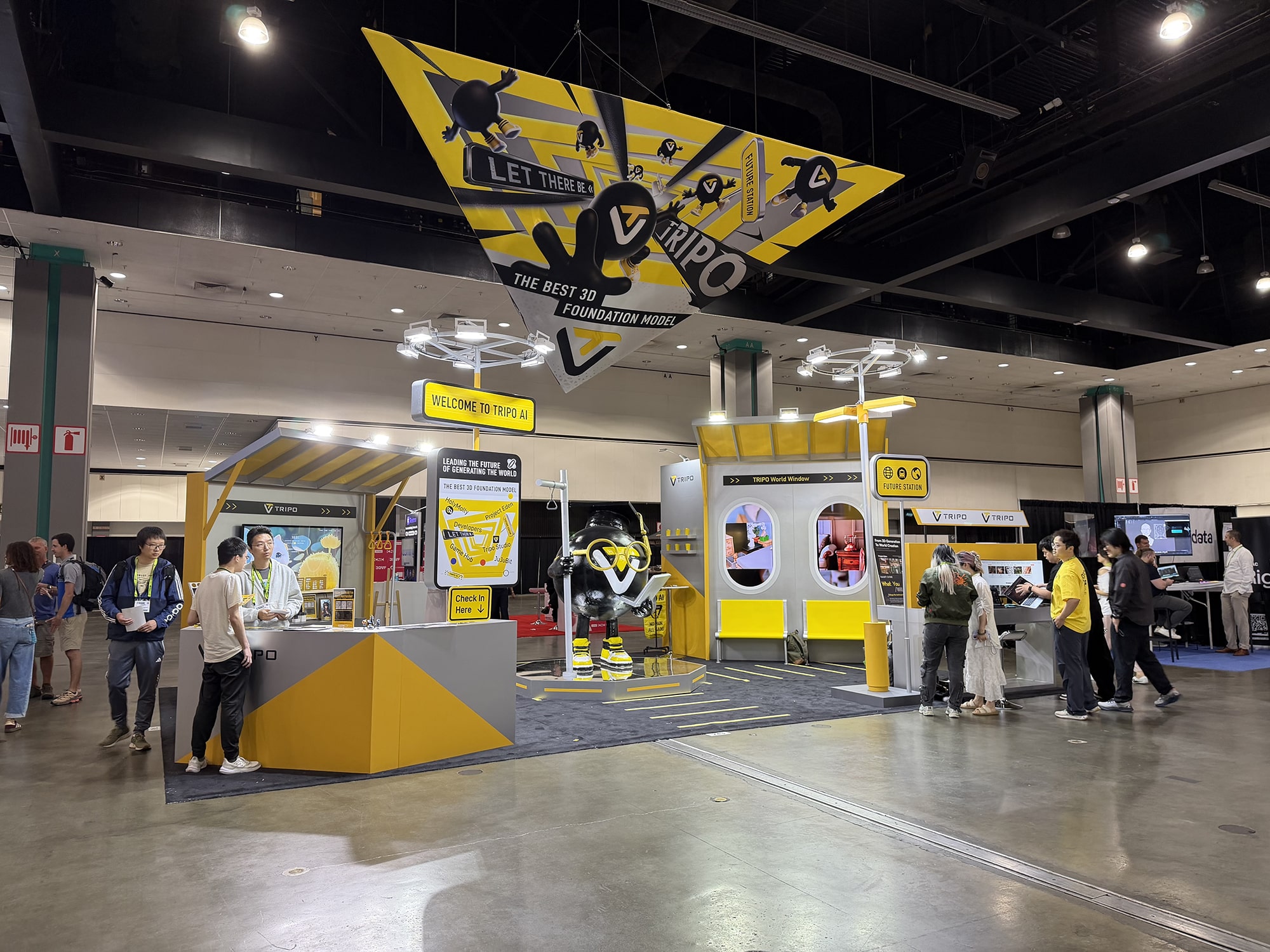
TRIPO booth at SIGGRAPH 2026.
Tripo recently received a $200 million investment for their research project, Project Eden. Project Eden is building the foundations of interactive worlds that are persistent, multi-agent, and universally authorable. After seeing it at SIGGRAPH, I will have to admit it is quite impressive. If you are interested in building quick, easy objects for your projects, this is indeed a company worth exploring.
STEG AI
Steg AI is a forensic watermarking business for content security. The forensic watermarking tools for provenance, content leak protection, and deepfake security. The tools Steg AI creates protect videos, images, documents, and audio from misuse. Their products include:
- Leak Protection and Tracking that can save content creators, marketing, and security teams from millions of dollars in revenue. Protecting your brand.
- Content Provenance creates a watermark embedded into your content. It provides authenticity verification to protect customers, employees, and your brand.
- Copyright Protection with forensic watermarking, so that each time an asset is downloaded, we apply an imperceptible watermark that points back to the user, license, and metadata.
Architects, Engineers, and Construction professionals must protect their work; it was refreshing to see a company like this among AI companies that have built businesses to protect your IP. AEC clients will appreciate the protection of their work while working for their clients.
BOLT Graphics
Bolt Graphics was a refreshing new company on the show floor at SIGGRAPH. A new GPU company focused on the creative market. Jill Mueller, CMO and Creative Director, was at the booth demonstrating the new Zeus GPU for HPC, Rendering, & Gaming.
MORE: Bolt Graphics’ Advanced GPU to Take On Nvidia
Ms. Mueller comes from an interior design background, and she teamed up with Darwesh Singh, the founder, CEO, and CTO, to build something from the ground up for creatives who need a great graphics card at a reasonable price point. (starting at possibly USD 1,000)
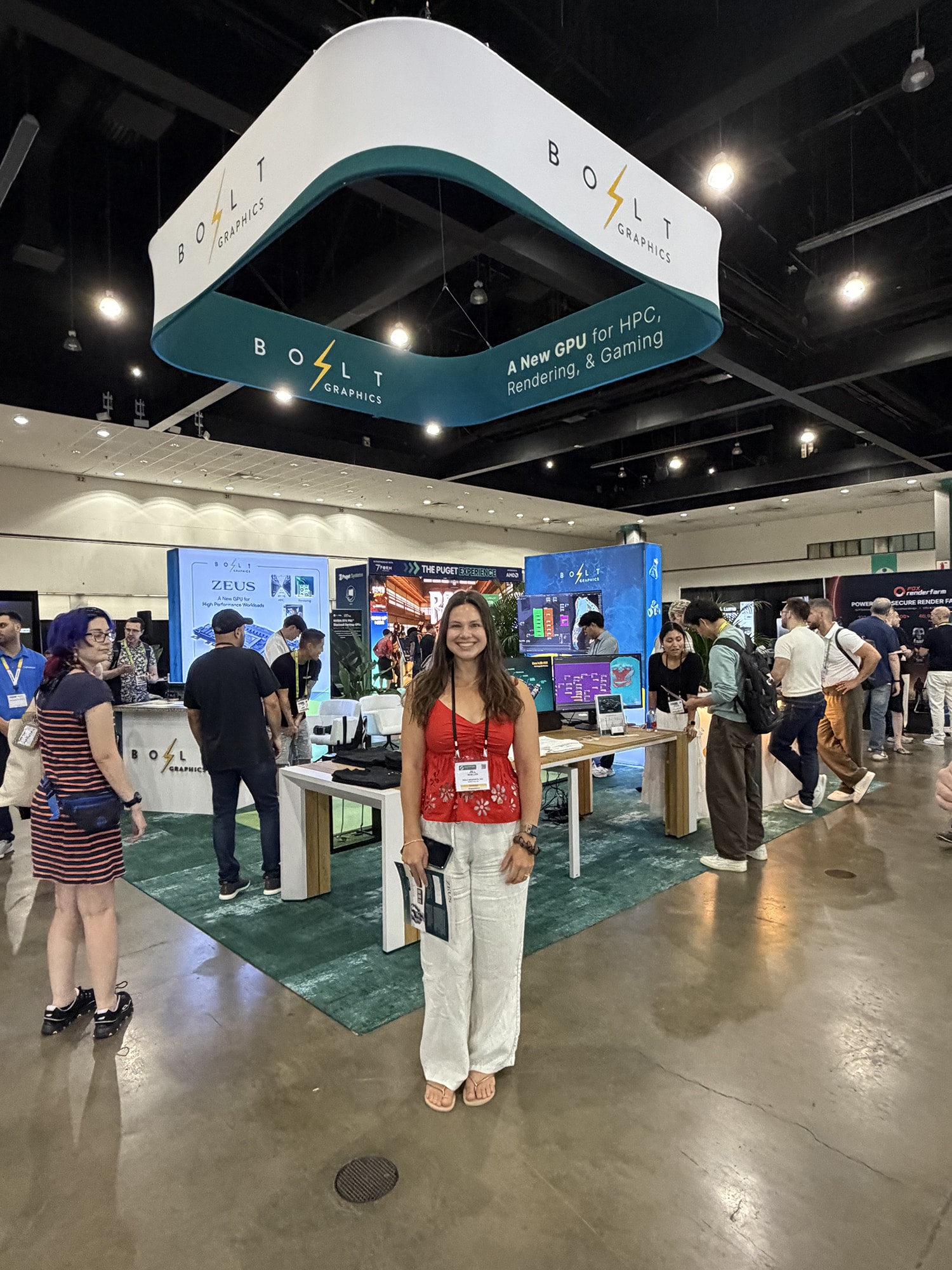
Jill Mueller, CMO and Creative Director of Bolt Graphics. A new GPU architecture and board maker doesn’t pop up every day in the computer graphics industry, so the news about Bolt was exciting to say the least. Architosh has covered the news in a separate detailed report here.
Zeus features include:
- GPU can be a “Standalone PC” with a high-performance RISC-V CPU inside Zeus, so you can run it as a standalone PC with Linux out of the box.
- User-expandable memory so you are in control and can upgrade the memory based on the work you do. Up to 384 GB in your PCIe card or 9 TB in the 2U server. The unique architecture allows for memory to be shared across chips. (Preventing crashes.)
- Designed for Scale. There is a 400/800 Ethernet on the Zeus so you can directly connect all the GPU’s together or switch without expensive and high-latency network cards. (Definitely cost-effective.)
The first Zeus GPU cards will not be ready until the end of 2027 for a select few, and mass production is expected in 2028. Considering the chip shortages, this is a welcome relief for artists and those in AEC, especially given the performance projections of the GPU.
Maxon
Maxon was on the show floor at SIGGRAPH, and the coolest thing I saw was Maxon Cinema 4D on the iPad Pro. (see: Architosh, “Cinema 4D Comes to the iPad” 8 May 2026)
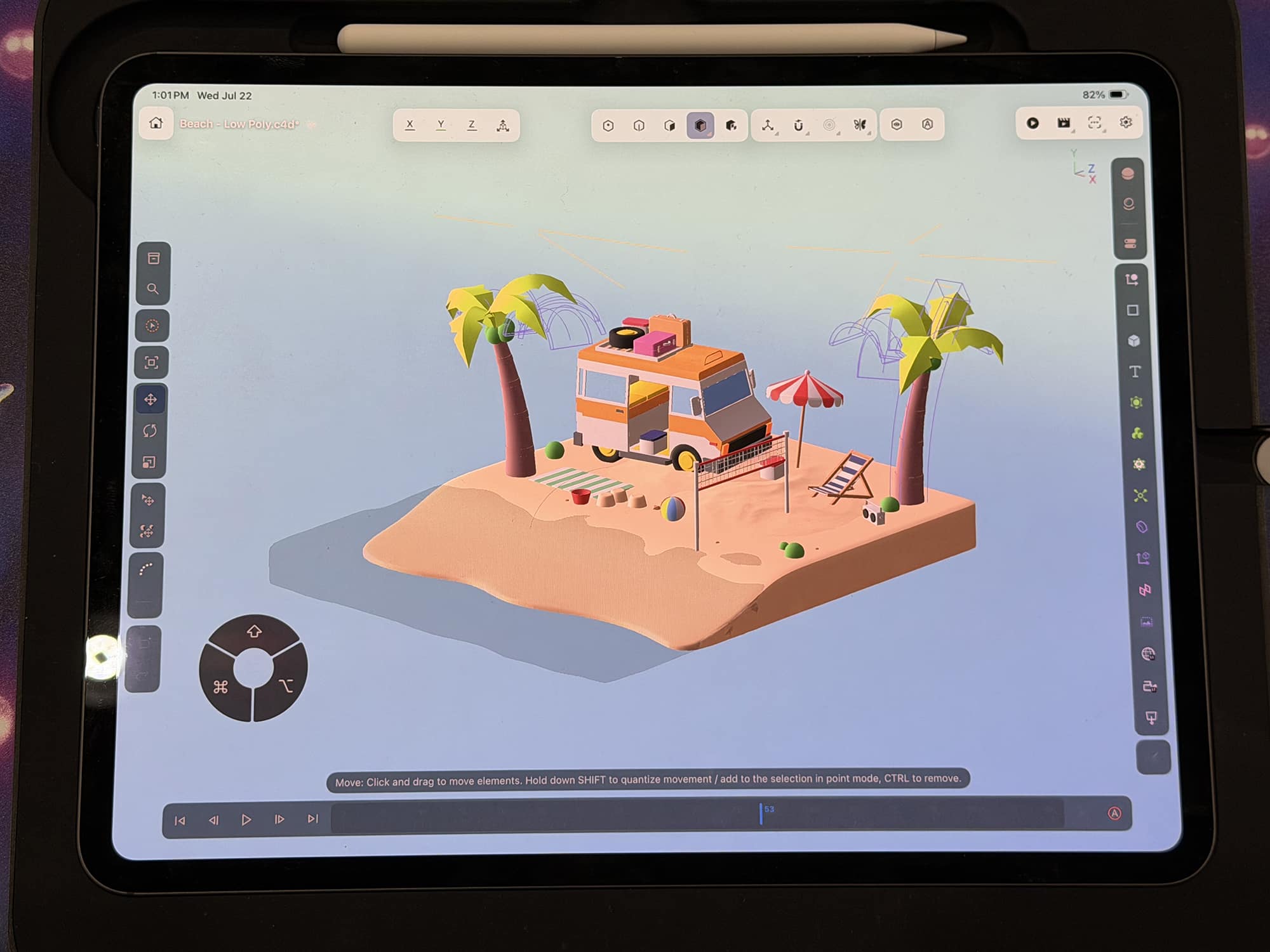
Cinema 4D on the iPad Pro is a big deal in the M&E industry. Digital content creators often use sketching as the starting point of the creation process, so tools that work on the iPad with the Apple Pencil are huge.
It was seamless and easy to use. It has not been released yet but after seeing how well ZBrush runs on the M chips by Apple, you can see how wonderful a platform the iPad Pro will be in the creative space with software like Cinema 4D.
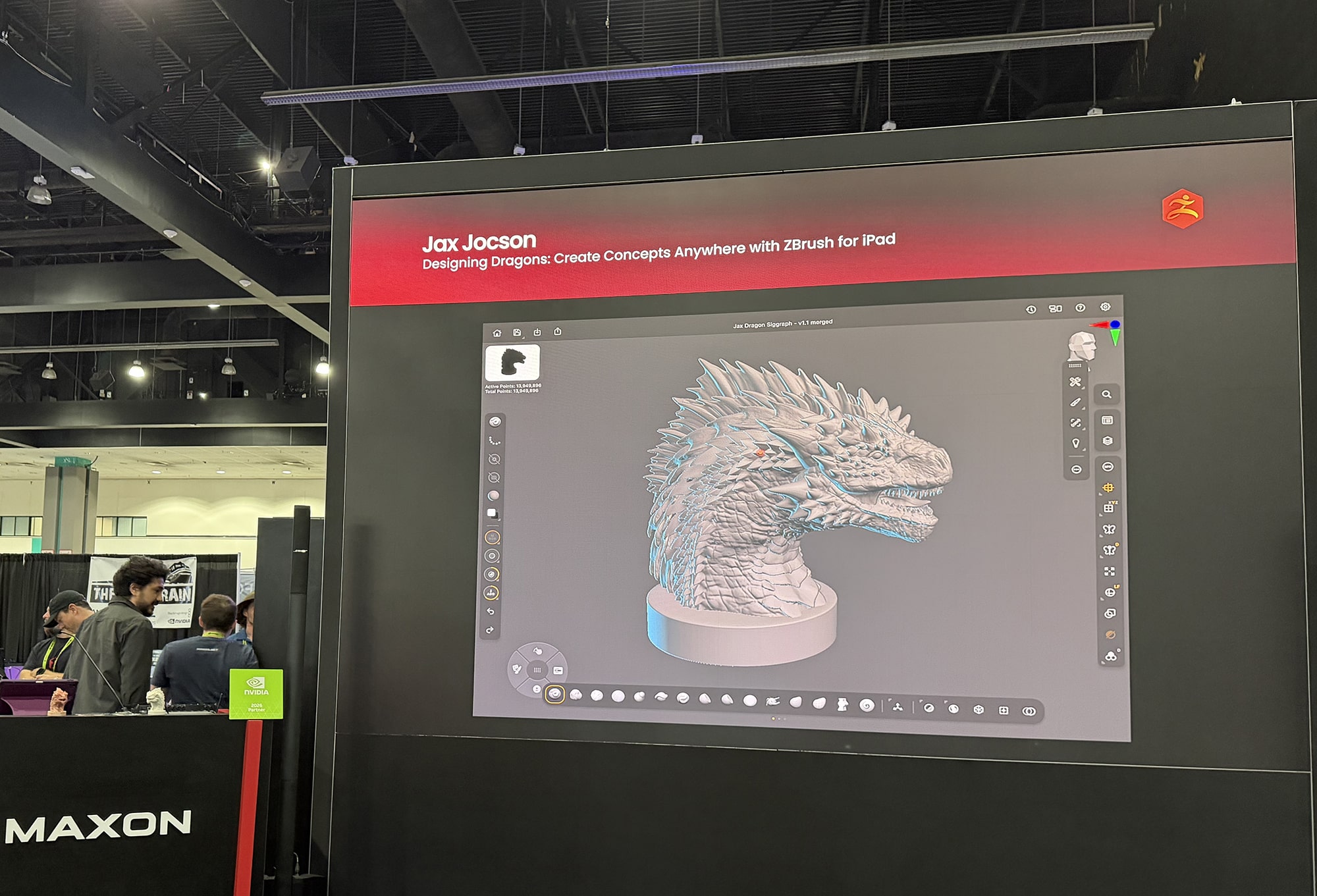
ZBrush is another major tool from Maxon in M&E.
I believe running Cinema 4D on an iPad Pro brings an affordable solution for creatives. I can’t wait to use the Apple Pencil and play with it. If you are a Mac user, the seamless integration will be really strong.
Wacom
Wacom introduced their new affordable Android tablets called Movink Pad to artists at SIGGRAPH that are wonderful for creating and drawing on a tablet the way you would with your hand with multiple tools.
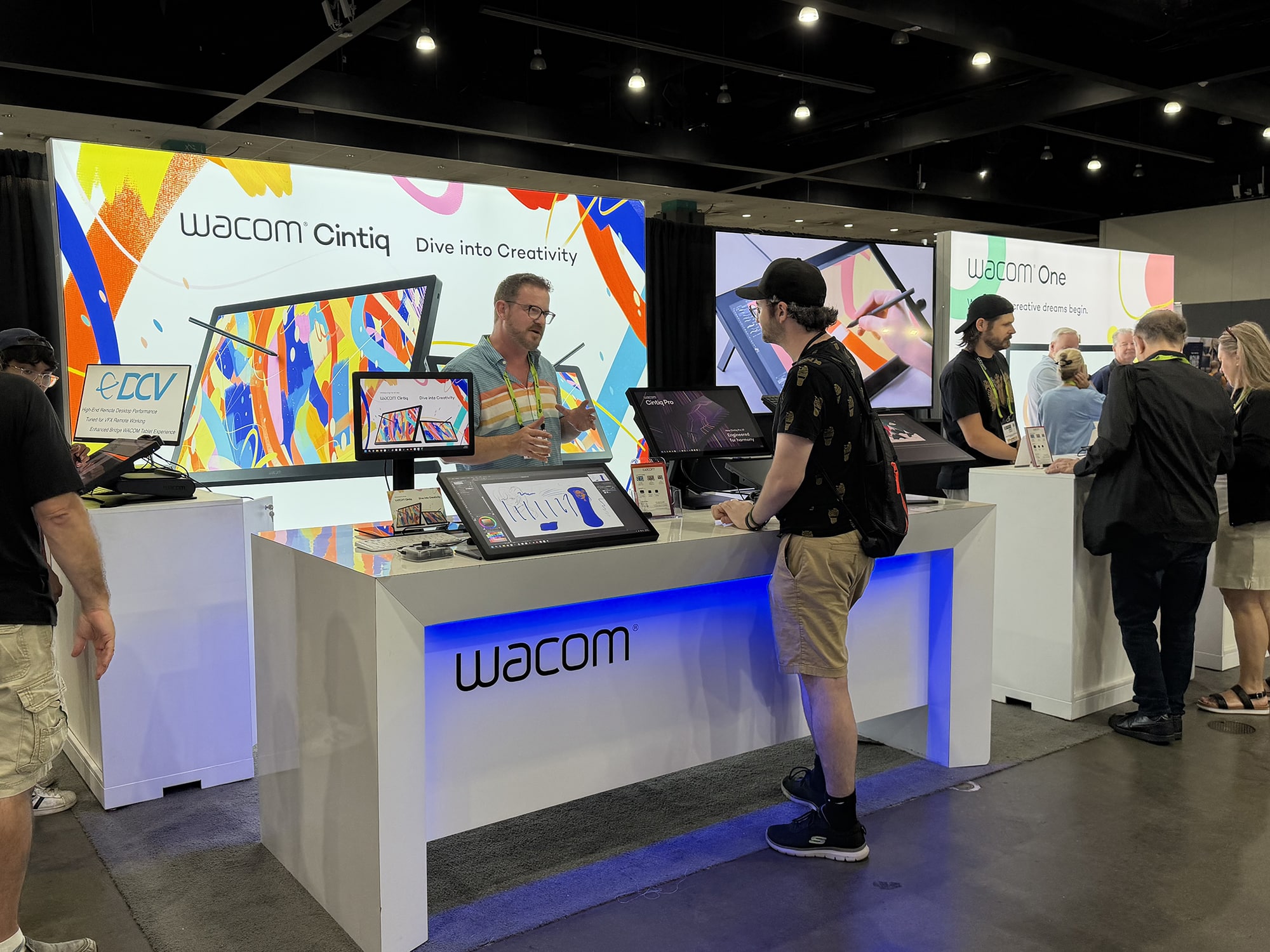
Wacom tablets are a gold standard in the DCC industry.
It comes at an incredible price point starting at $450. I would like to point out that, unlike the iPad Pro or iPad, it does not yet run certain software apps, such as Final Draft or certain enterprise packages, so if you need to run other software, you may still need your iPad.
X-GRIDS
X-GRIDS is 3D content production powered by Multi-SLAM 3D Gaussian Splatting technology. Architosh has written about Gaussian Splatting technology several times recently (see: Architosh, “Chaos Launches Corona 14 with AI Material Tools and Gaussian Splat Support” 20 Nov 2025).
Lixel K2 is their gold standard for lightweight scanners. X-GRIDS showcased their LCC 2.0, an open-source LCC2 format, with the newly released LCC Plugin for Unreal Engine—enabling real-time rendering of 100M= Gaussian Splats for high-fidelity UE Virtual Production.
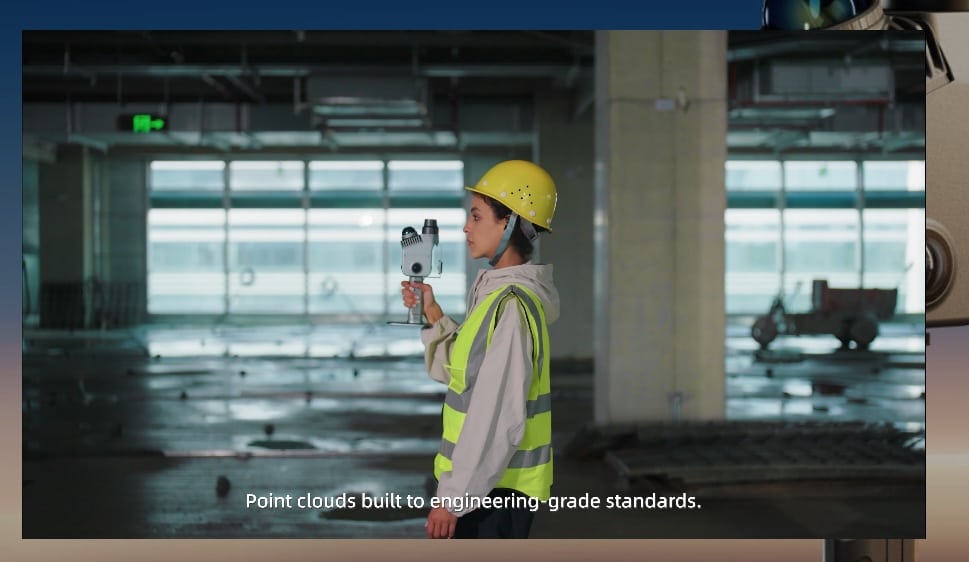
X-GRIDS’ new Lixel K2 is ideal for the AEC industry as a powerful portable, lightweight 3D scanner.
With LCC2, what you capture can work smoothly with a wide range of platforms and visualization tools. It turns captures into interactive cinematic scenes.
X-Grids is used by AEC professionals for Façade Measurement, Real Estate Survey, Reverse BIM Modeling, and BIM Construction Management. The integration of the LCC plugin for Unreal Engine will make high-powered visualization easier.
Innovative technologies & Closing Thoughts
HP and Dell both showed off recent workstations and claimed that Blackwell GPU RTX Pro workstations are available now. As has been typical in recent years, Apple did not attend SIGGRAPH despite the popularity of Macs and iPads with DCC (digital content creation) industry professionals.
Despite this, I do think Apple hardware can provide an option for artists who need a powerful solution and are still within a reasonable price range. Apple’s lineup of professional hardware products, including the iPad Pro, is used by professionals to build their pipelines. Like all computer makers, Apple raised its prices due to a RAM shortage, but the Mac Studio and MacBook Pro are still amazing workhorses and are reasonably priced solutions for professionals.
NVIDIA helped drive demand for GPUs, and in some ways, because of the AI datacenter craze and shortages, demand for another GPU maker in Bolt Graphics. The new NVIDIA RTX Spark Superchip-based workstations running Windows on ARM offer stunning AI, GPU, and CPU performance and performance per watt ratios that only Apple and Qualcomm have touched. These pose solid alternatives for professionals using MacBook Pros today who need top-line absolute compute performance for 3D and animation or film editing workflows, but only if a Windows on ARM native version of their tools of choice is available. Professional software for Windows on ARM is beginning to materialize, with Adobe working on native products, and others already in existence.
If you need a high-end traditional workstation, Dell, Lenovo, and HP can certainly accommodate. This article doesn’t cover everything at SIGGRAPH 2026 because I wanted to focus on solutions for everyday artists. I hope that some of the options I discovered will help make it easier to find what is right for you. There is more news to come. Count on it.