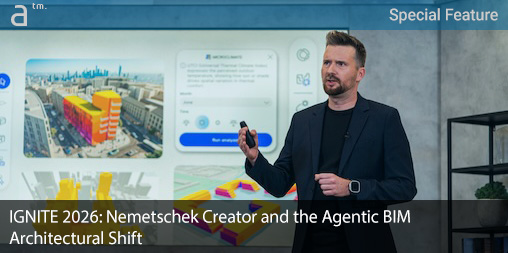
THIS YEAR GRAPHISOFT IGNITE 2026 returned to its traditional, press-only live format, focusing on an expanded portfolio of new products, cloud infrastructure, and AI technologies. (see: Architosh, “Graphisoft Unveils Archicad 30 & Nemetschek Creator,” 7 Oct 2026). Architosh readers who missed the live event can watch all the presentations here.
Key announcements included Nemetschek Creator (previously previewed as Project Aurora) and the Nemetschek Group’s Open Collaboration Platform (OCP), both now open for early access registration. These announcements accompany the launch of the Archicad 30 flagship product line, along with updates to MEP Designer (Studio), BIMx, BIMcloud, and the new Archicad MCP (Model Context Protocol) initiative.
IGNITE 2026 Highlights
Graphisoft’s IGNITE events are global broadcasts where users worldwide watch detailed presentations of core technologies rolling out each fall. In this studio broadcast-like setting, an invited group of AEC technology press, industry influencers, and other media participates in a Q&A session with Graphisoft CEO Daniel Csillag, Chief Product Officer Márton Kiss, Vice President of AI & Data, Sylwester Pawluk, and key software architecture executives.
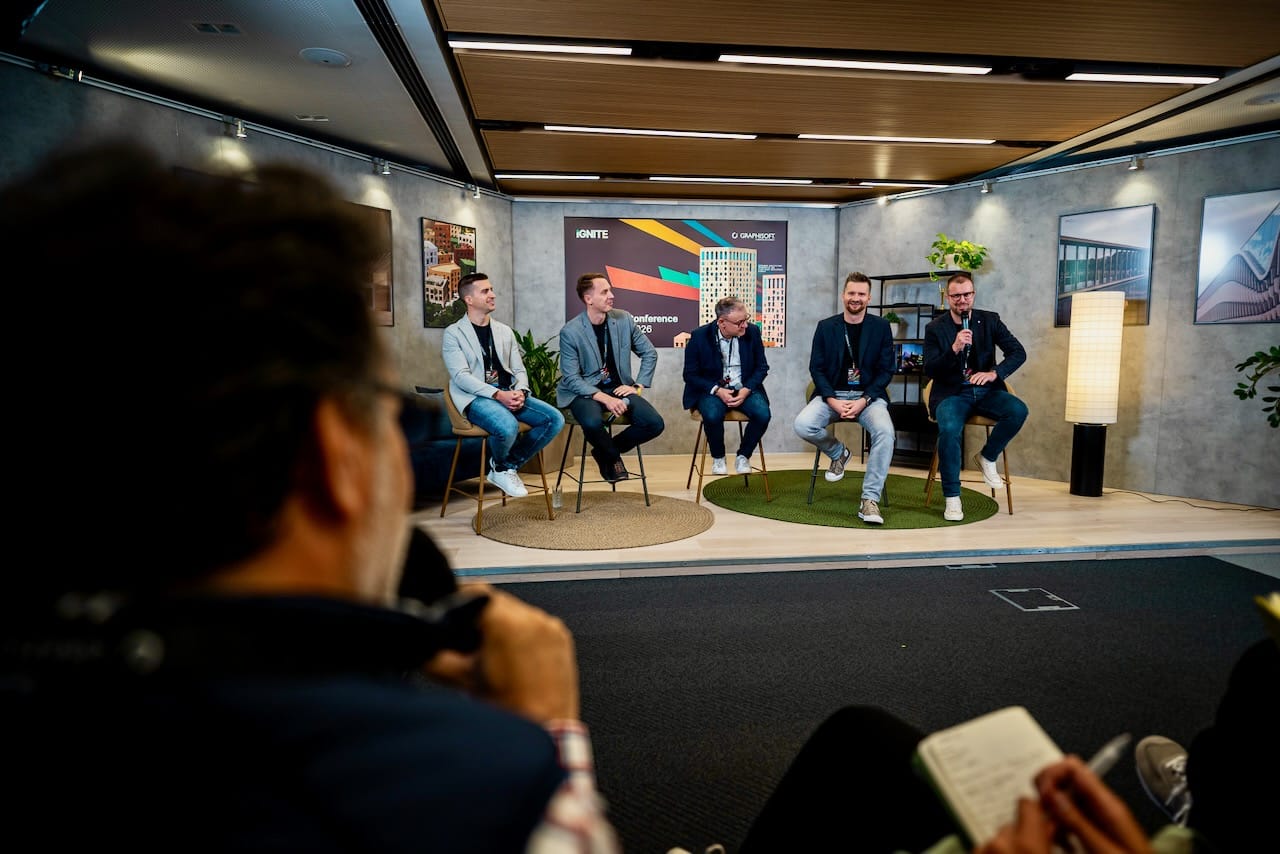
IGNITE 2026 Media Q&A session. Architosh editor Anthony Frausto asks the executive panel a question about Nemetschek Creator.
This format provides press outlets with critical access. The intimate media roundtable—comprising seasoned industry analysts and journalists—offers a platform for deep technical questioning that complements global industry reporting. In recent years, the media pool has become more strategic, with less overlap and broader touchpoints for reaching users.
As in prior years, Graphisoft IGNITE for media included an architectural tour led by an Archicad-based architectural practice. This year, Bánáti + Hartvig Architecture led media around their beautiful restoration and expansion project of the historic Drechsler Palace, a Neo-Renaissance building originally designed by Ödön Lechner and Gyula Pártos in the late 19th century. This building is now the W Budapest Hotel. (More on this subject in another future report).
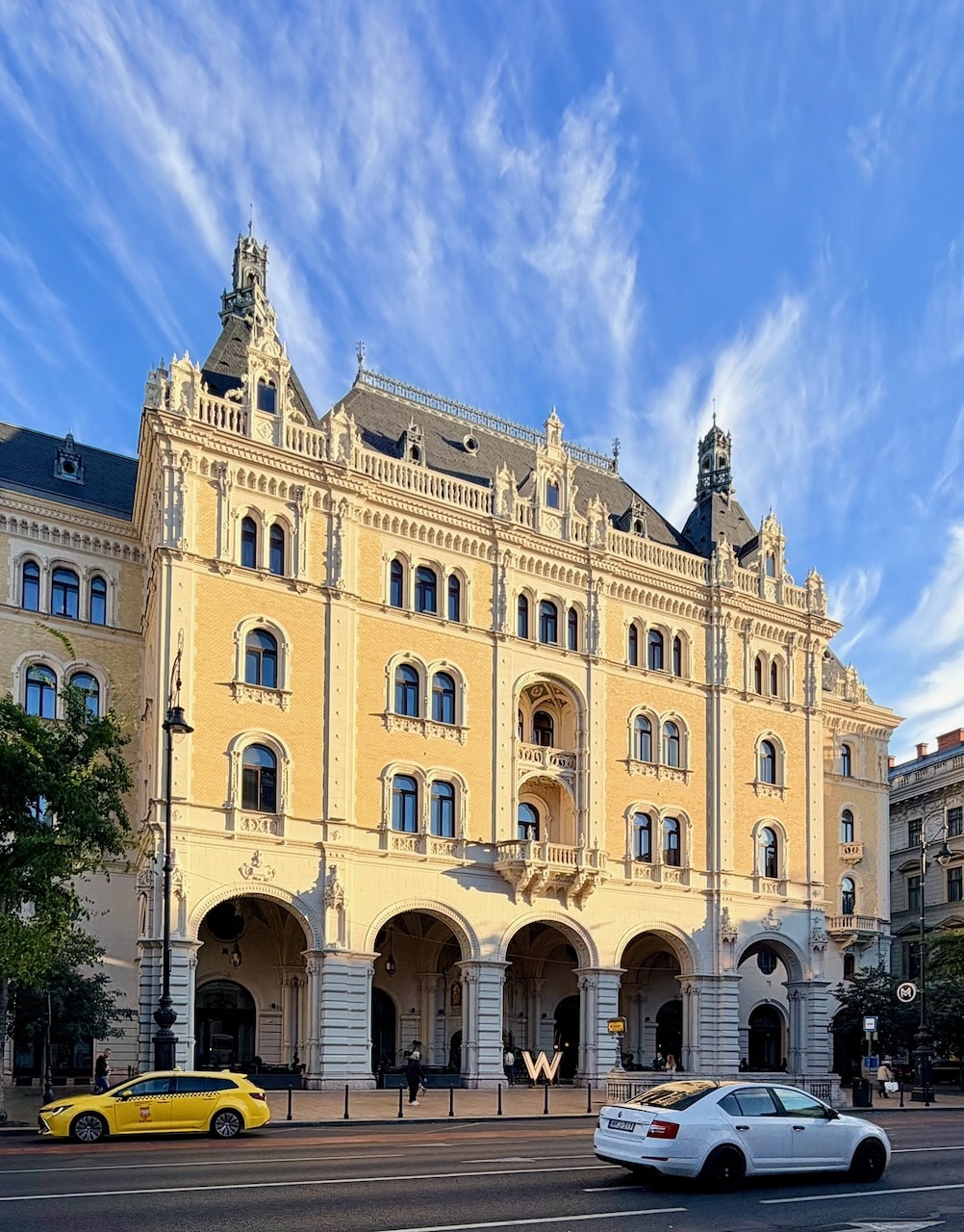
Hungarian architecture firm Bánáti + Hartvig Architecture has stunningly designed the W Budapest Hotel inside the historic Drechsler Palace (former Pension Institute of the Hungarian Railways). (Image: Architosh / All rights reserved)
In this first IGNITE 2026 feature, Architosh will focus on Graphisoft and Nemetschek’s new cloud-based Nemetschek Creator, with our next report covering other announcements.
Nemetschek Creator
During the press Q&A, I asked why Project Aurora was branded as Nemetschek Creator, given its initial positioning as Graphisoft’s direct response to Autodesk Forma and other emerging BIM 2.0 platforms.
Márton Kiss, Graphisoft’s Chief Product Officer, explained that adopting the Nemetschek parent name reflects the platform’s deep, multi-brand integration and long-term role. He cited dRofus—the group’s advanced building program and data management tool—as a primary integrated engine within Creator. Other Nemetschek Group solutions may play an integrative role with Nemetschek Creator, but only dRofus was clearly mentioned at this time.
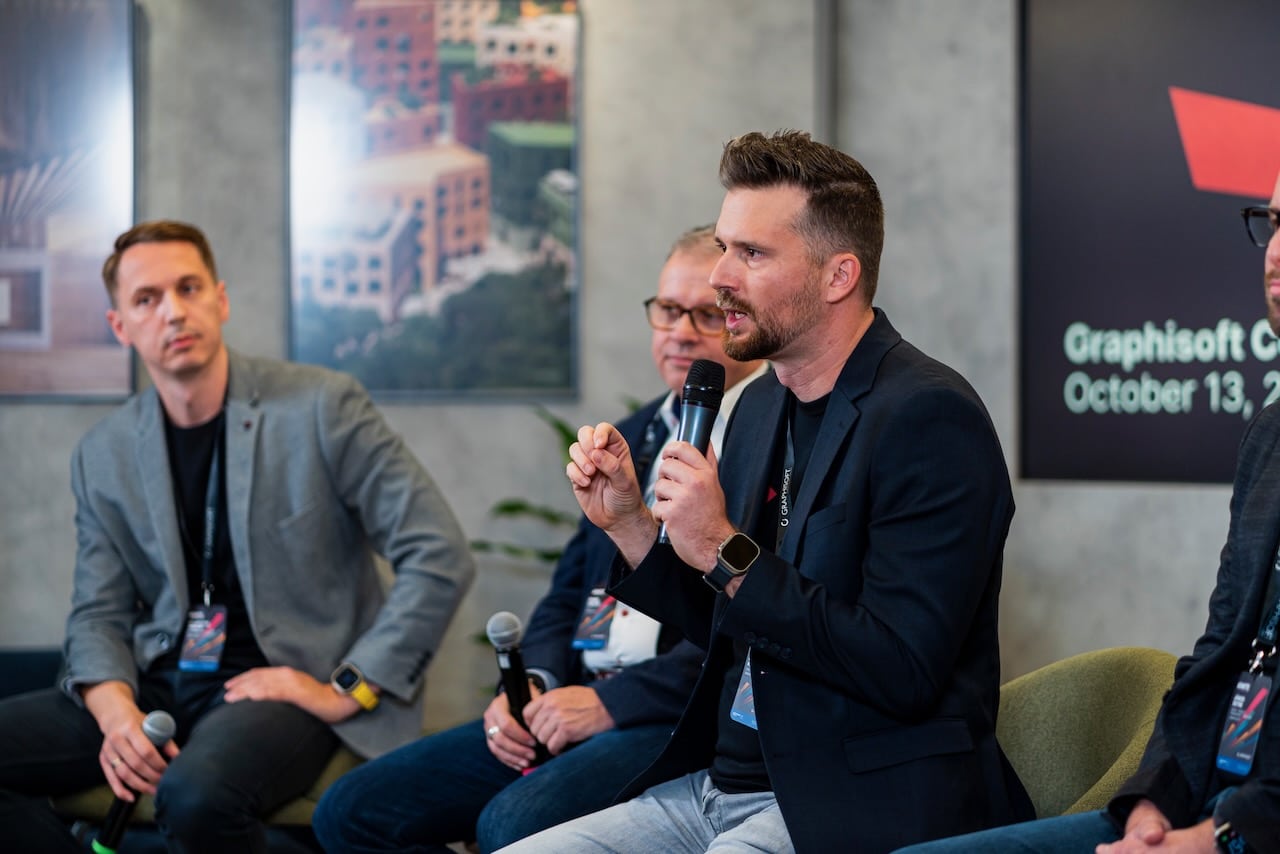
Márton Kiss, Chief Product Officer, Graphisoft, explains why the Nemetschek brand name is attached to the new cloud-based, agentic BIM-centric Nemetschek Creator.
This naming decision reflects a broader structural reorganization across the Nemetschek Group. As Ulrike Beringer, Senior Director of Group Communications & Corporate Responsibility, explained to Architosh in an email back in late August:
As you know, to expand our strong and leading position in the industry, the Nemetschek Group started three years ago to continuously transform into a global organization, with closer collaboration across brands and a clear focus on profitability and efficiency to be stronger together.
Architosh has been told several times, including last week, that Nemetschek’s Design Segment is increasingly co-developing core technology stack modules. This marks a definitive shift from the Group’s historical “hands-off” holding company strategy toward shared enterprise infrastructure across its globally scattered subsidiaries.
In more concrete terms, if sister company Vectorworks develops a tech stack, say, related to Maxon’s Redshift rendering technology, the Group shares that work across its other BIM authoring apps, Archicad and Allplan. The same has happened in the reverse direction with Archicad’s AI Visualizer technology. The Group’s individual BIM authoring companies are not only coordinating on agentic AI technologies like MCP but also conducting independent agentic AI research into alternative applications of AI technologies.
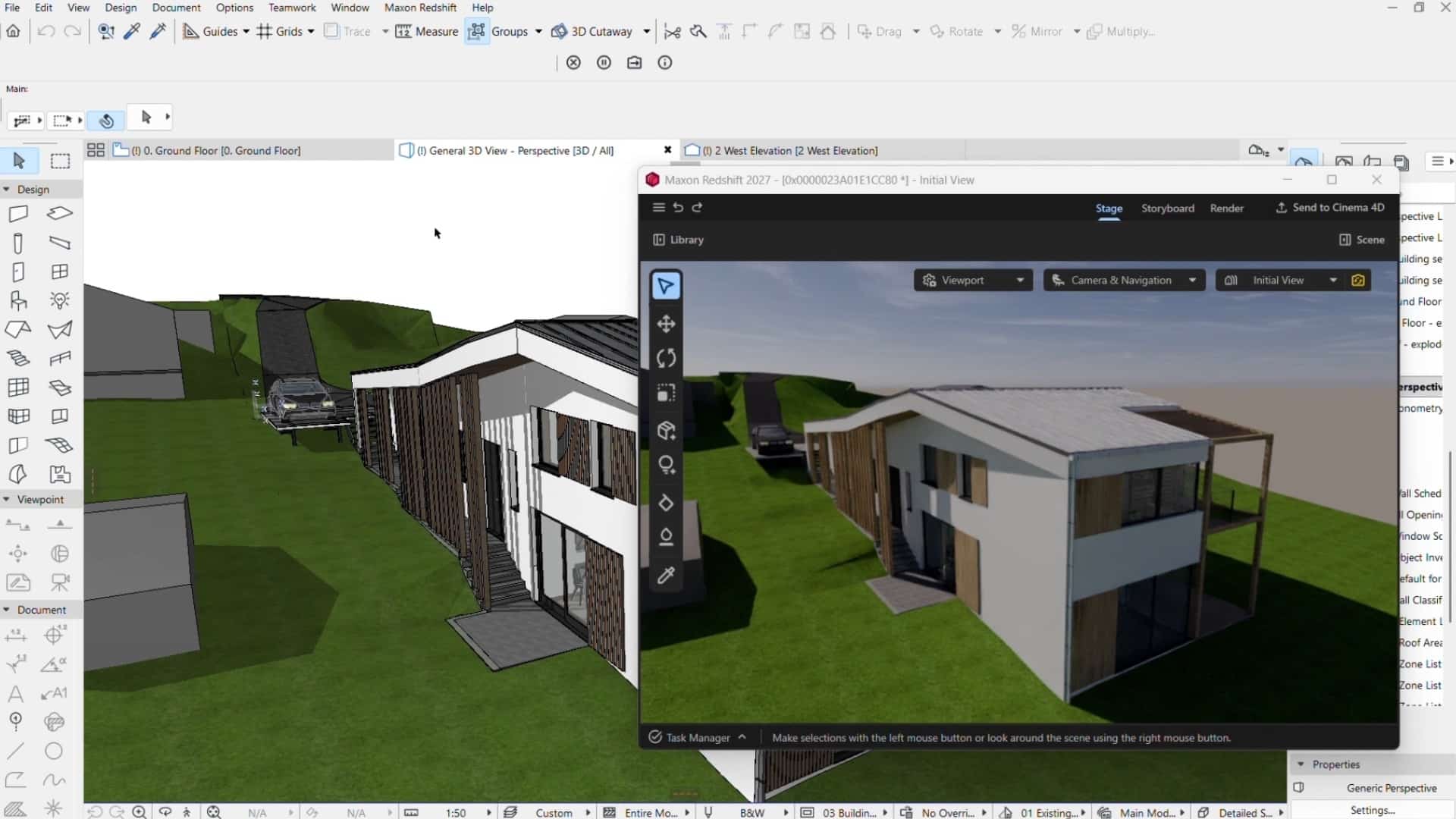
During the same week as Graphisoft IGNITE 2026, Germany’s Maxon, a sister company to Graphisoft, announced Redshift for Architects 2027 with new support for Archicad. This technology sharing at the Group level exemplifies enterprise-level efficiency and global leverage.
This mix of Group-level coordination and independent research, under the umbrella of global enterprise resource sharing, gives the Nemetschek Group a strong formula to compete with its primary peer, Autodesk. And this brings us to Nemetschek and Graphisoft’s answer to Autodesk Forma.
Answering BIM 2.0 with Agentic Architecture (BIM 2.0+)
The AEC industry is well aware of the cloud-native design platforms targeting early-stage site, massing, and environmental analysis. These so-called “BIM 2.0” web tools offer browser-native multi-user canvases that desktop monoliths struggle to replicate.
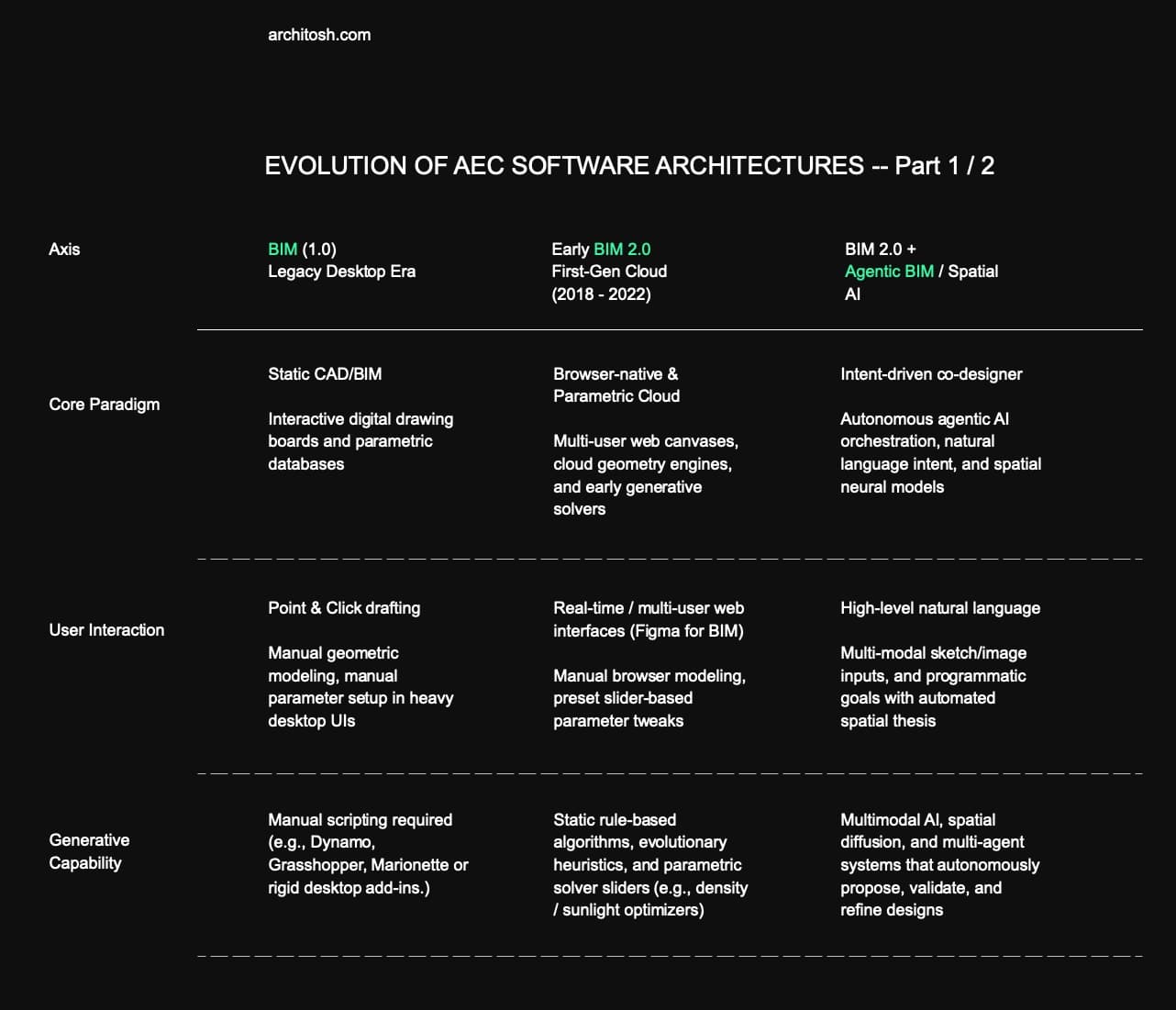
Evolution of AEC Software Architectures Part 1/2. Click to see larger.
However, Nemetschek Creator represents a distinct branch: it was conceived, architected, and coded post-ChatGPT and for agentic AI. To understand why a post-AI architectural foundation matters, we must examine the paradigm shift across three generations of AEC software architecture. (See images above and below.)
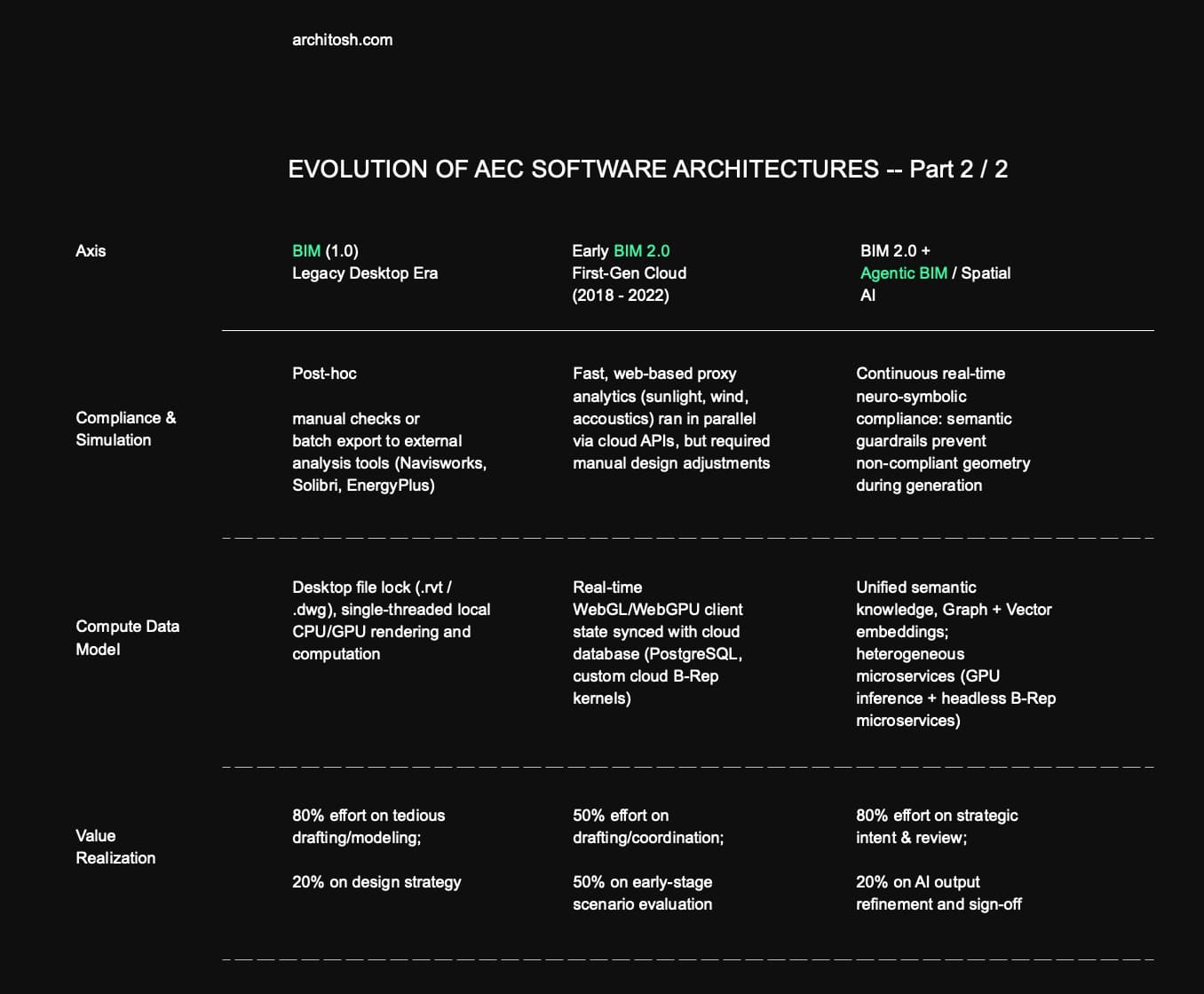
The Evolution of AEC Software Architectures Part 2/2
Nemetschek Creator introduces Intent-Based Interactive Design—an operational paradigm in which users define programmatic goals, environmental constraints, and spatial criteria, enabling generative AI agents to propose compliant spatial iterations. Graphisoft says on its website that “Nemetschek Creator is an AI-first approach that turns project intent into feasible design options before detailed modeling begins.”
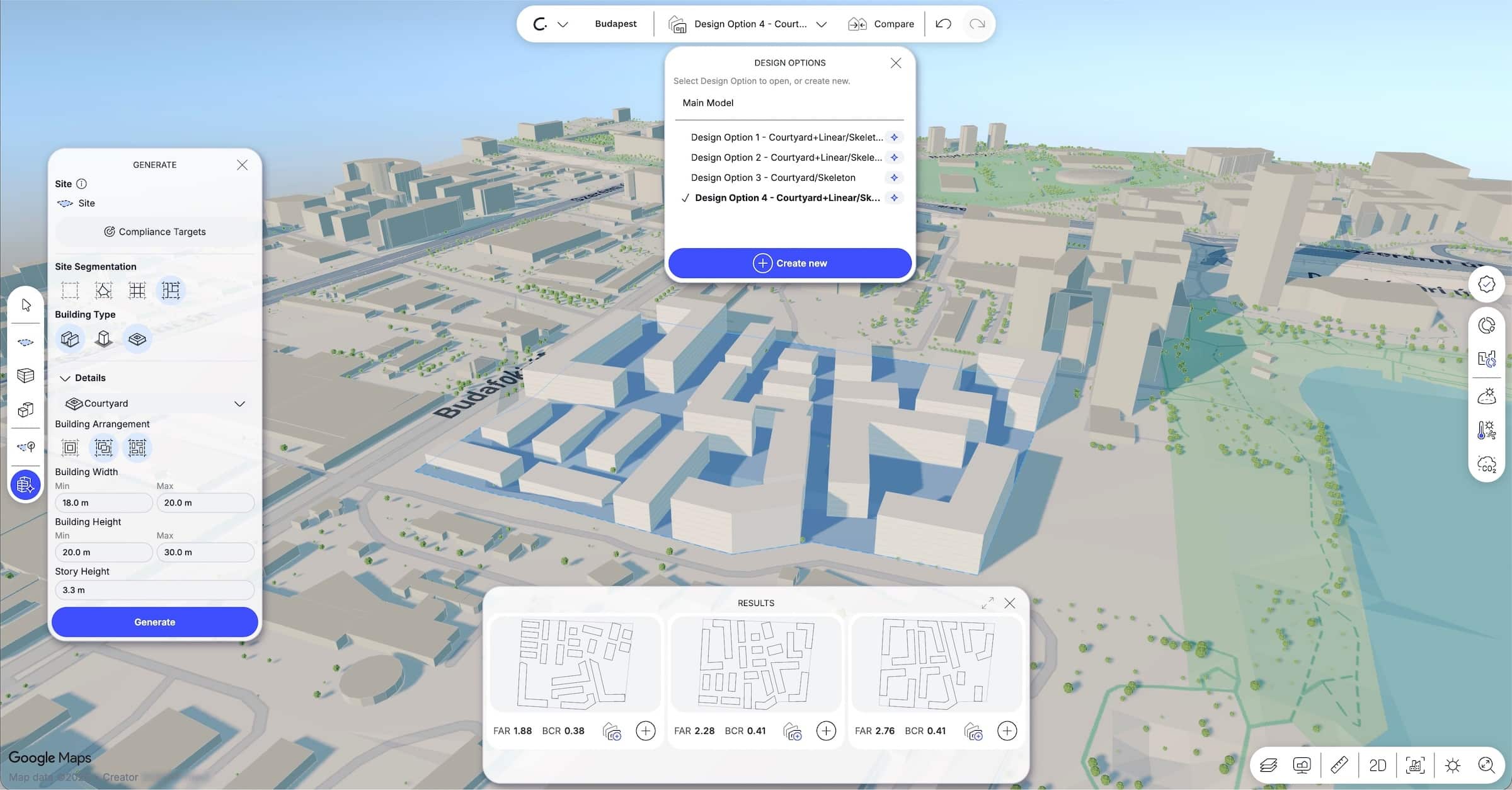
Nemetschek Creator offers users an AI-first approach that turns design intent into feasible design options.
“Using project requirements, site constraints, performance goals, or visual references, teams can generate, evaluate, and refine concepts against sustainability and performance criteria,” says Graphisoft.
Beyond iterative spatial generation, Nemetschek Creator performs core BIM 2.0 environmental analytics—simulating daylight, carbon footprint, building code compliance, and contextual terrain physics. It functions as a cloud workspace where early massing options can eventually be pushed and bidirectionally synced with Archicad. Additionally, multiple project stakeholders can be invited into the project on the cloud through their web browser.
As Nemetschek Creator enters early access beta, Graphisoft said its generative capabilities will evolve rapidly over the coming year. This acceleration is possible because Graphisoft has spent years quietly re-architecting its codebases and data structures, and refactoring its core codebase to prepare for agentic orchestration.
Archicad’s Hybrid Microservices Advantage
In a one-on-one interview at IGNITE 2026, Márton Kiss highlighted a structural asset observers often overlook: Archicad’s modular, hybrid microservices architecture.
To drive this point home, note a recent Architosh report on Autodesk Revit 2027’s GPU-accelerated graphics, which enabled smooth sectioning. In that analysis, we noted that Graphisoft decoupled Archicad’s display pipeline from its core parametric database over a decade earlier.
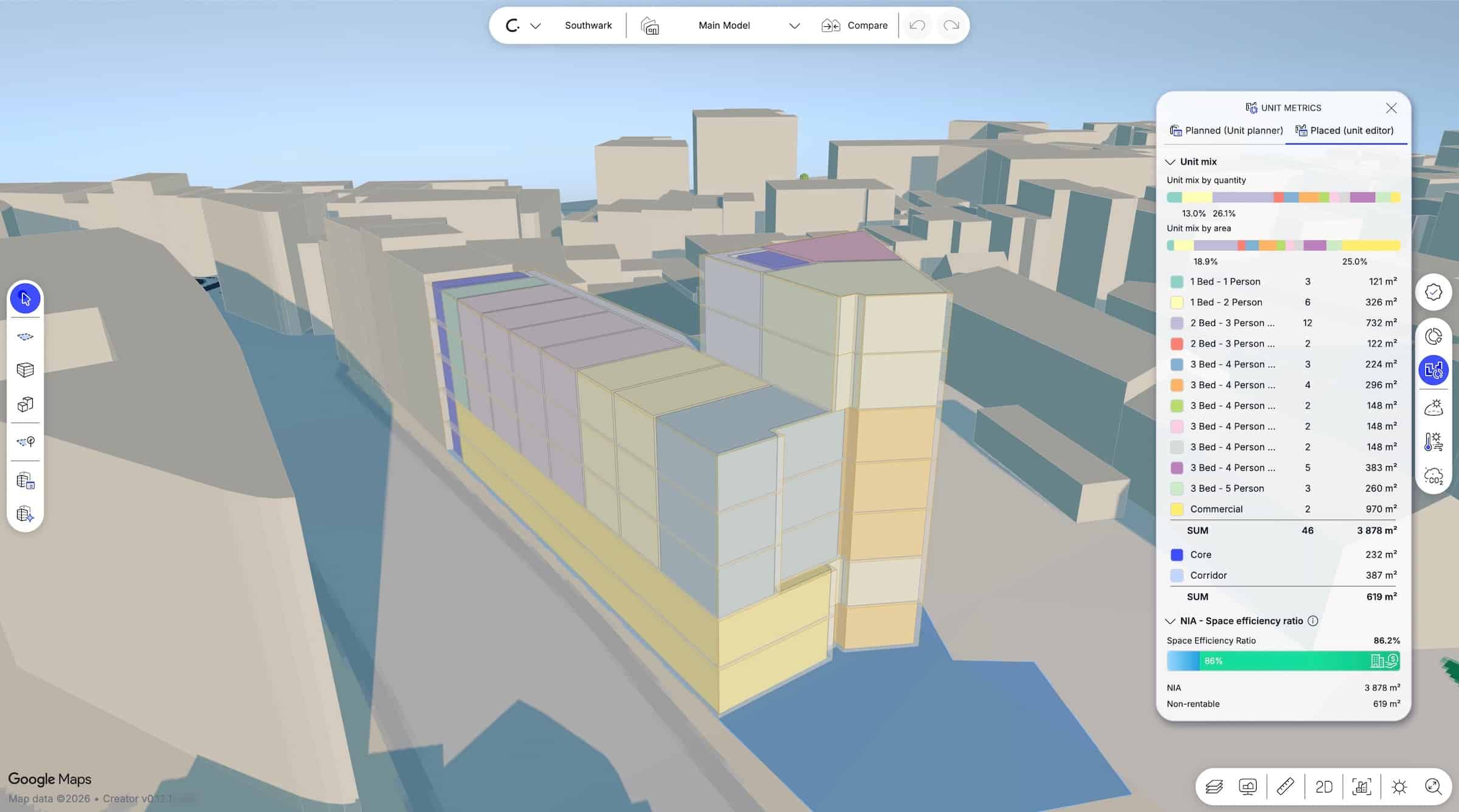
Nemetschek Creator can do unit studies for buildings, similar to other BIM 2.0 tools. At this early stage, Creator doesn’t yet match all the capabilities of rival BIM 2.0 solutions, but Graphisoft is a fast innovator with some of the world’s top CAD industry programmers.
While thread decoupling within a desktop binary isn’t a microservice in itself, that early modularization is the prerequisite software engineering needed to build and deploy successful cloud microservices.
The Role of Microservices in Agentic BIM
Unlike monolithic C++ desktop binaries—where the user interface, geometry evaluation, and display logic compile into a single executable—microservices operate as isolated, single-purpose network services.
In an agentic BIM ecosystem, Large Language Models (LLMs) and Small Language Models (SLMs) do not directly calculate B-Rep solid math or rasterize geometry. Instead, they act as reasoning orchestrators, calling external microservices via standardized protocols like Model Context Protocol (MCP).
When an AI agent evaluates a floor plan, it invokes an independent Egress Microservice or Daylight Analysis microservice to receive deterministic mathematical facts.
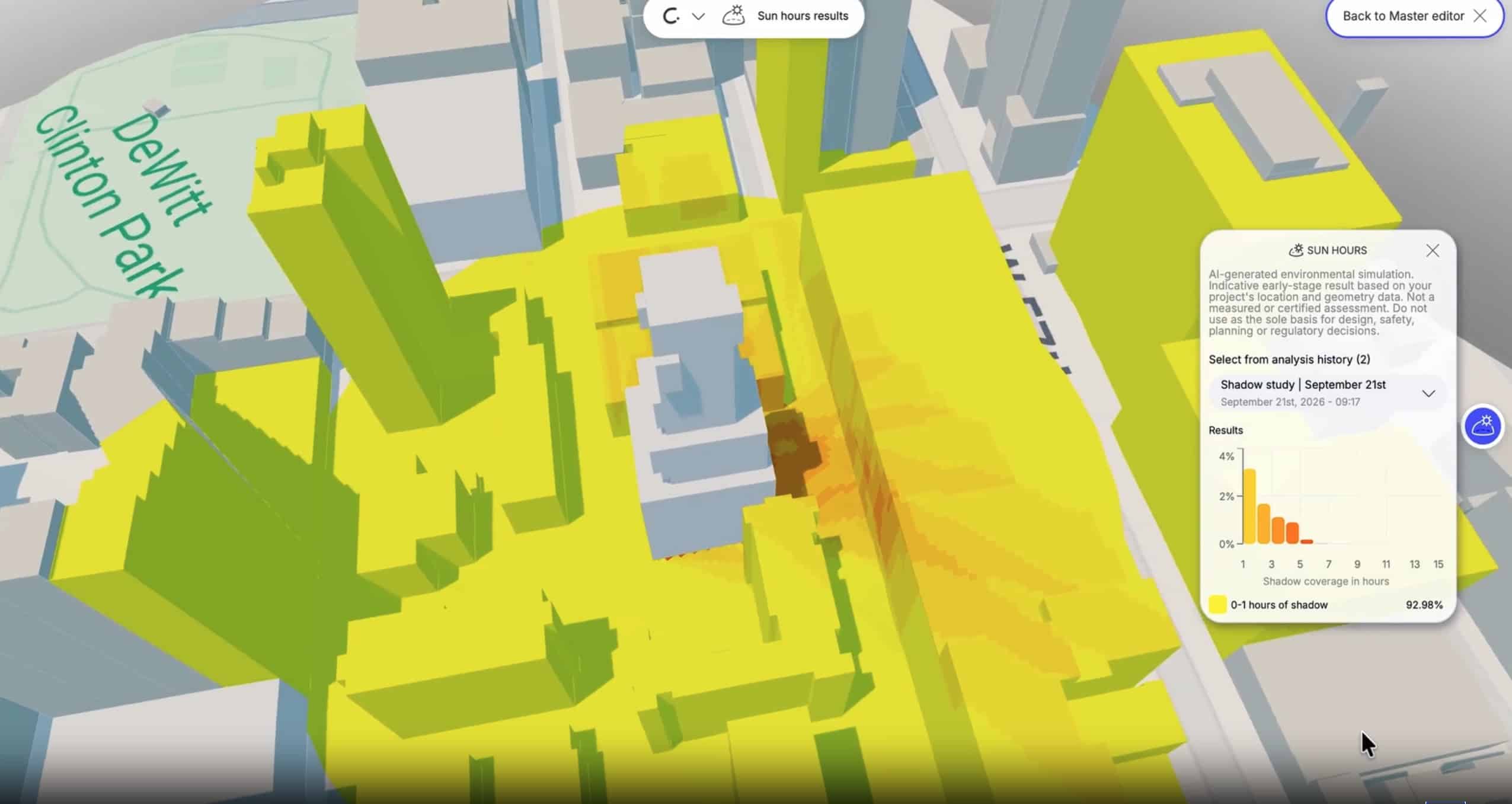
Sun studies and microclimate analysis in Nemetschek Creator. A user inputs criteria and goals to establish (design) intent. The AI-first approach generates feasible design options (massing models) which are then evaluated against daylight and microclimate analysis.
This pattern solves generative AI’s primary weakness: probabilistic hallucination. While neural models excel at spatial reasoning and intent parsing, microservices act as deterministic truth engines. The AI agent proposes spatial options, but headless C++ B-Rep microservices execute the exact solid modeling with sub-millimeter precision.
Scalability and Legacy C++ Refactoring
Microservices also unlock heterogeneous cloud scaling. When an agent generates 150 compliant floor plan options simultaneously—it offloads these tasks across cloud server clusters that auto-scale in seconds—a computational feat impossible on a single-threaded desktop monolith.
Furthermore, microservices allow Graphisoft to deploy local SLM microservices on an architect’s Apple Silicon Mac or Windows workstation for fast, private building-code checks, while offloading heavy structural matrix solves to cloud microservices.
Closing Reflections
Unlike early-stage BIM 2.0 startups building new geometry kernels from scratch, Graphisoft sits on 40 years of battle-tested C++ geometric math, B-Rep algorithms, and parametric solvers. Re-coding those millions of lines of complex geometric math for modern web canvases could take decades and introduce thousands of edge-case bugs.
Instead, as Márton Kiss confirmed, Archicad’s modular architecture lets Graphisoft systematically refactor its legacy C++ libraries and use them for its new cloud tools, wrapping the core math in modern, containerized cloud services.
Graphisoft is not rebuilding its geometric foundation from scratch for the agentic BIM era. It is leveraging decades of disciplined C++ code modularization—originally partly necessitated by its cross-platform support for both macOS and Windows—to deliver new cloud-based solutions like Nemetschek Creator.