
FOR APPLE’S 50TH ANNIVERSARY, it felt only natural to sit down with architect Neal Pann. While many know him as a co-founder of the Archispeak podcast, Pann occupies a unique niche in our industry as the creator of Apple for Architects—a digital sanctuary for those of us who have navigated the intersection of Cupertino’s hardware and the rigorous demands of architectural practice.
Our full conversation is available on our Architosh Official YouTube channel, but several themes emerged that deserve a closer look through the lens of architectural practice and the specific evolution of the machines that built our world.
The Architecture of a Collection
“Back in the day, in order to buy your next Mac, you had to sell the previous one,” Pann recalls, reflecting on the humble origins of what has become a staggering personal archive.
For many architects, the Mac was never just a tool; it was a capital investment. Pann’s collection—spanning over 73 machines—began almost by accident, fueled by a meticulous habit of preservation. “I always kept everything—the boxes, the manuals, everything in pristine condition,” he says. This attention to detail eventually yielded high resale values, allowing him to bootstrap his way through Apple’s evolving product cycles.
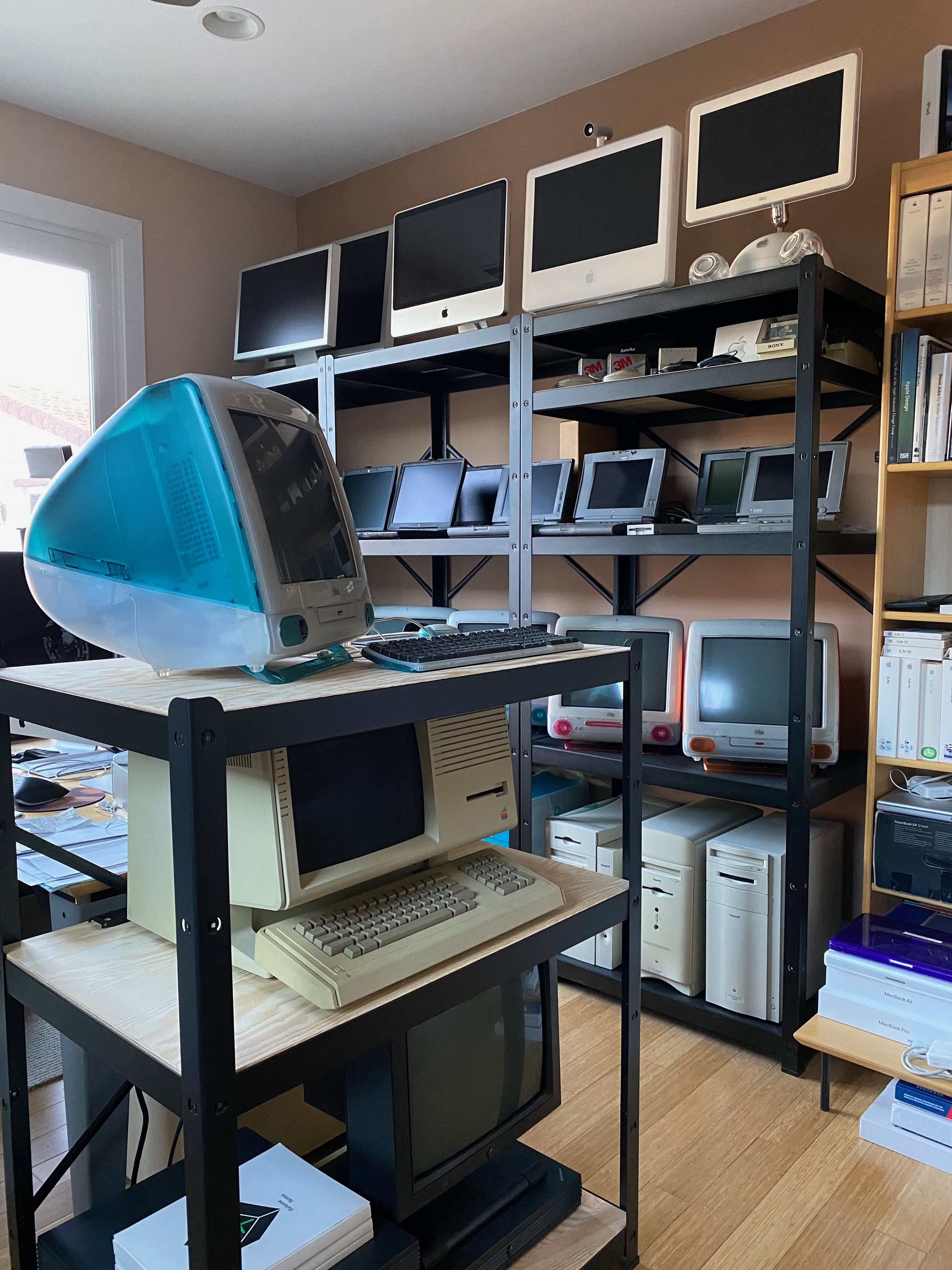
Architect Neal Pann, co-founder of podcast Archispeak, creator of Apple for Architects, has a vast 73 machine collection of Apple computers, including a NeXTstation. We talk about this collection–and a range of Macs in Architecture issues–in the ToshTalk video interview above.
As Pann’s career (and studio space) grew, the need to sell faded, giving way to a desire to preserve the industrial design that mirrored his own professional values. “I appreciated not only the operating system and its simplicity, but the design of the computers themselves. They were pieces of art,” Pann notes, echoing a sentiment that traces back to the Jony Ive era and the celebrated monograph, Apple Design.
A Symbolic Totem: From the SE to the Twentieth Anniversary
Every collection has its “Patient Zero.” For Pann, it is the Macintosh 512k—the very machine he used in an architect’s office straight out of high school. In a poetic gesture, the computer now sits atop a classical architectural column in his studio. It is a striking visual metaphor: the “New Order” of digital drafting literally supported by the “Old Order” of classical tradition.
I appreciated not only the operating system and its simplicity, but the design of the computers themselves. They were pieces of art.
From that SE, the collection scales the heights of Apple’s hits and misses, including several rare “halo” products:
- The Twentieth Anniversary Macintosh (TAM): A rare, integrated system that Pann still keeps in its original box.
- The Power Mac G4 Cube: A masterpiece of miniaturization that, despite its market failure, remains a pinnacle of Apple’s aesthetic ambition.
- The iMac G3 Era: His collection includes a “Dalmation Blue” iMac and a near-complete rainbow of the original fruit-colored units.
As we can see from the images in this article, Pann’s collection includes nearly the full rainbow of colors that the famous iMac G3 came in.
The Professional “Muscle”: Towers and Portables
For the practicing architect, the collection highlights the machines that actually did the heavy lifting of CAD and early 3D rendering. Pann’s archive includes the “muscle” towers that defined the professional workstation for decades:
- The Quadra & early PowerPC Era: His collection features the Power Macintosh 8600/200 in the Quadra 800 form factor and the Power Macintosh 9500/AV, marking the industry’s pivot from Motorola 68k chips to the PowerPC architecture.
- The G3 & G4 Towers: From the “side-saddle” beige Power Macintosh G3 to the iconic “Blue and White” G3 with its easy-access fold-down door—a design godsend for architects adding RAM or storage.
- The G5 & Beyond: The aluminum Power Mac G5 towers led into the Intel era, eventually leading to the infamous 2013 Mac Pro “trashcan” cylinder and a few Intel Xeon-based Mac Pros.
The portable history is equally represented, featuring the Titanium MacBook Pro, the original clamshell iBook (1998), and a wide array of PowerBooks that allowed the “mobile architect” to take their studio to the job site.
NeXT and the Lisa: The DNA of macOS
Not all of Pann’s collection bears the Apple logo. He also possesses a NeXTstation (1990), the sleek black hardware that Steve Jobs built during his “exile.” Beside it sits the NeXT Laser Printer, a reminder of Jobs’ obsession with high-fidelity output.
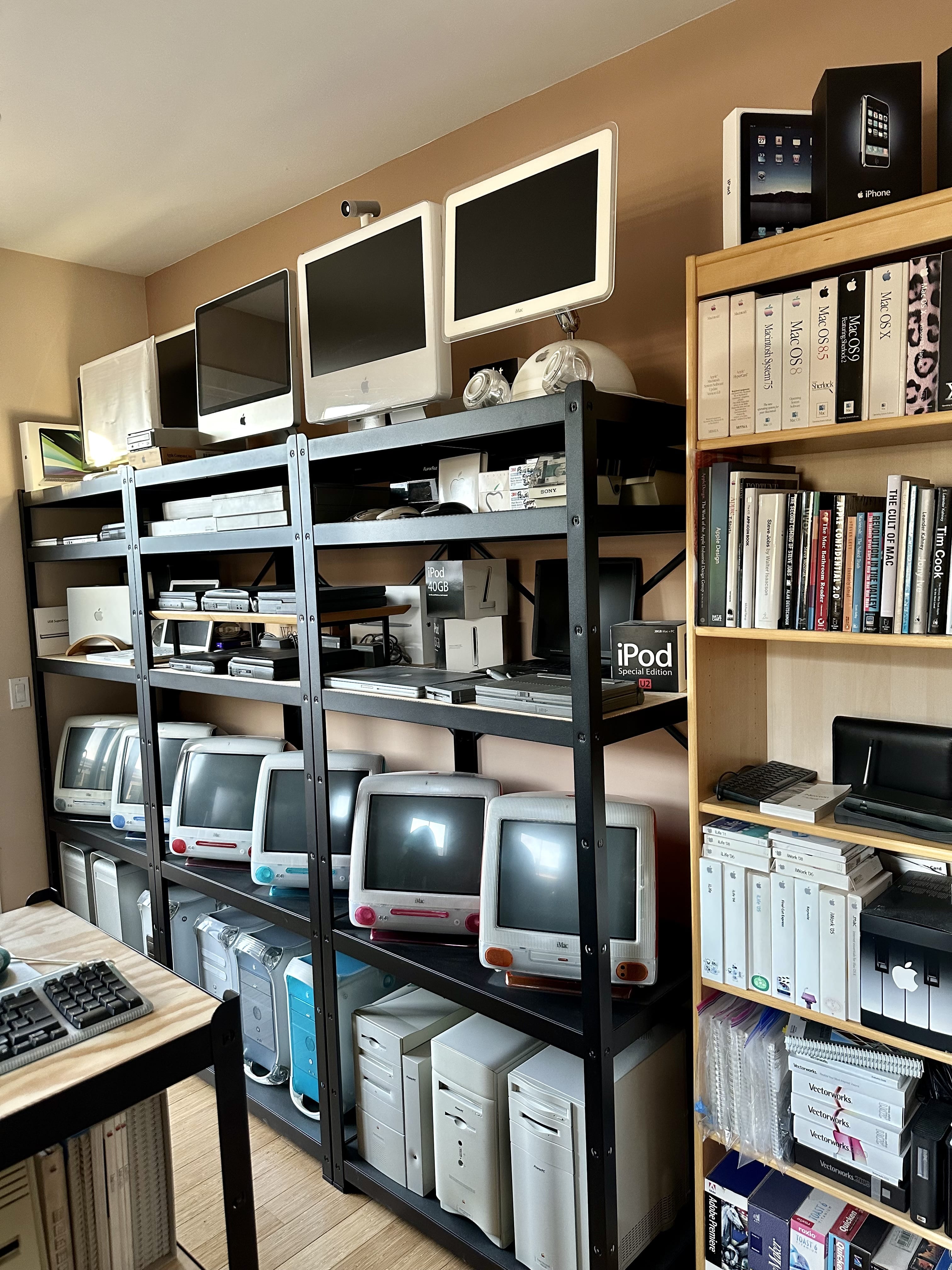
Power Macs sit below a collection of 1998 iMacs.
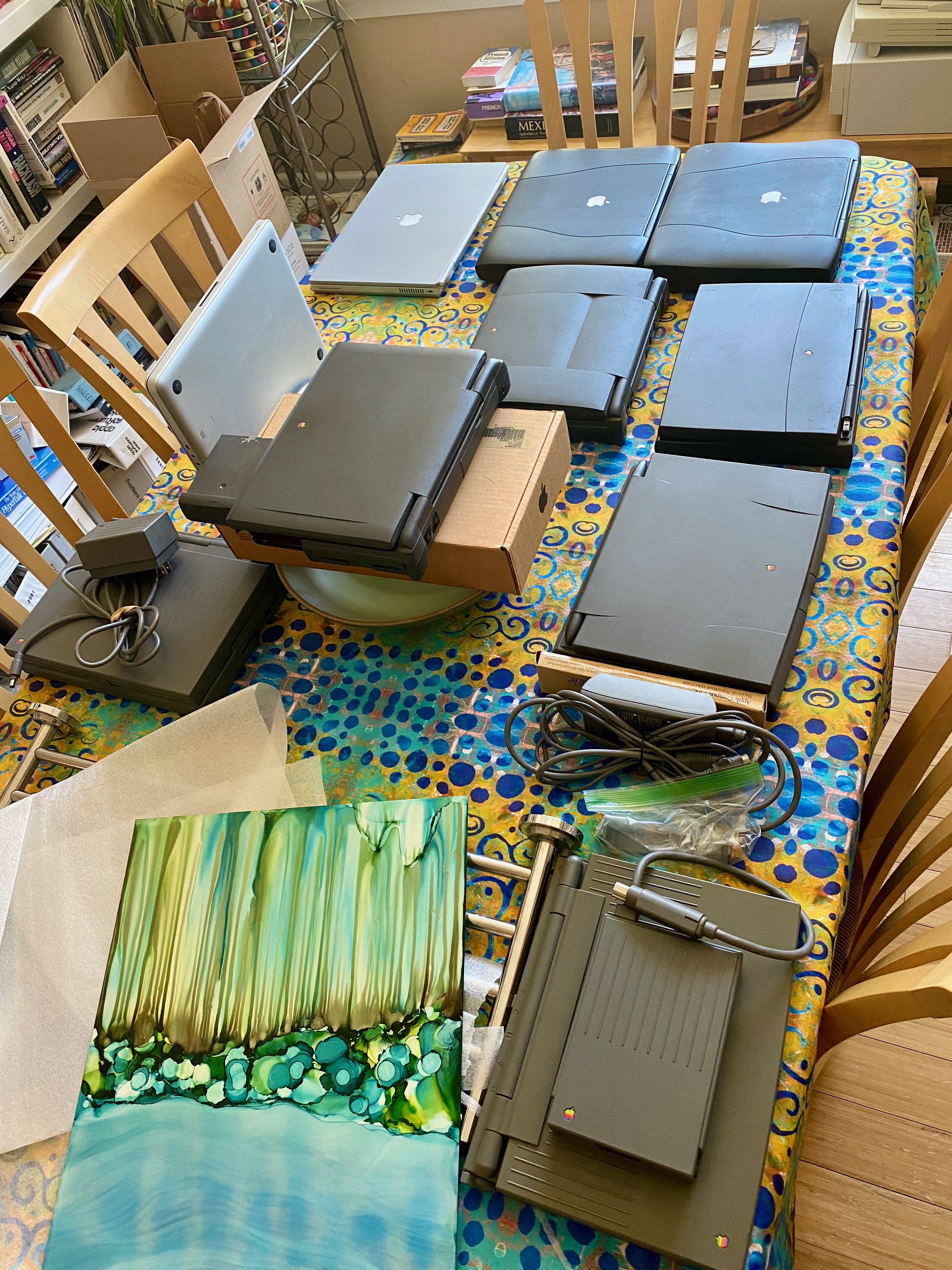
The PowerBook in various models.
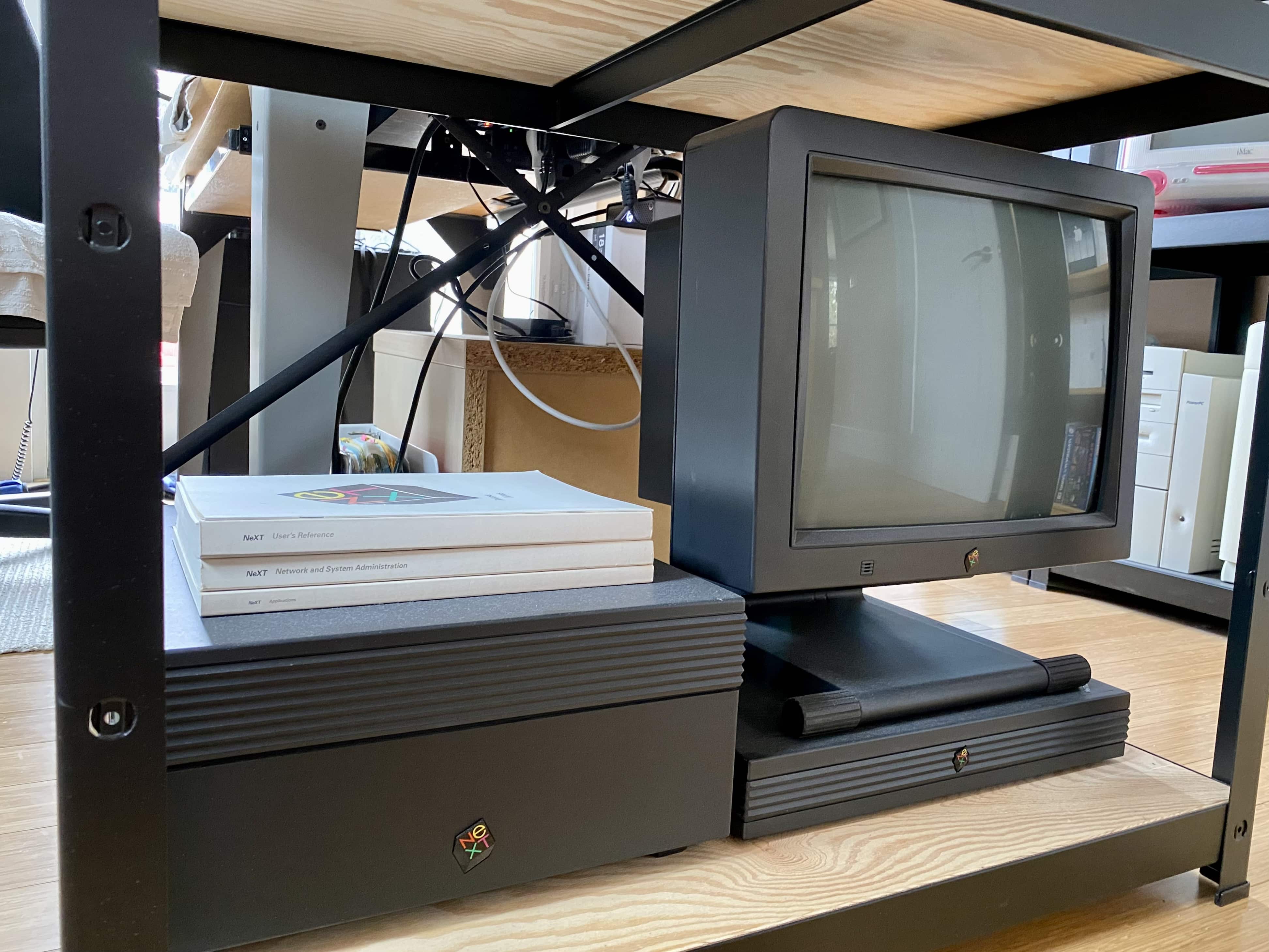
Pann’s NeXTstation computer and NeXT Laser Printer.
The collection also pays homage to the Apple Lisa 2 (1984 variant). Often described as Apple’s “best failure,” the Lisa used Sony 3.5-inch floppy drives and introduced technologies like QuickDraw and Object Pascal. However, it remained a document-centric machine, whereas the Mac would eventually win the day by being application-centric, but more importantly, vastly less expensive.
The “Apple for Architects” Legacy
Pann’s evangelism isn’t just about silicon and aluminum; it’s about community. When he launched Apple for Architects in the early “teens,” he effectively took up the mantle of Architosh’s original mission during a period when the “Mac in AEC” story was in flux.
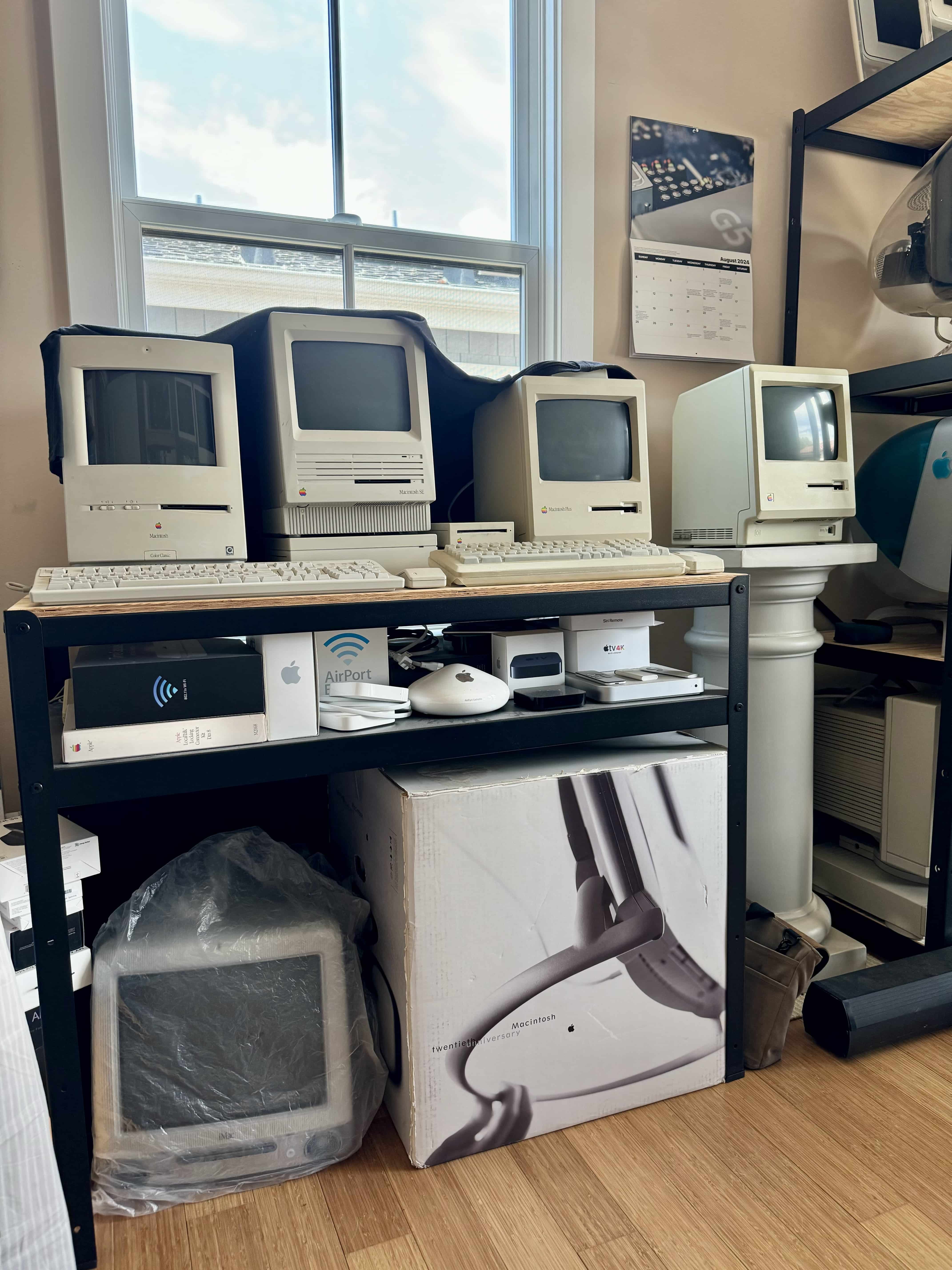
The Macintosh 512k sits on an architectural column.
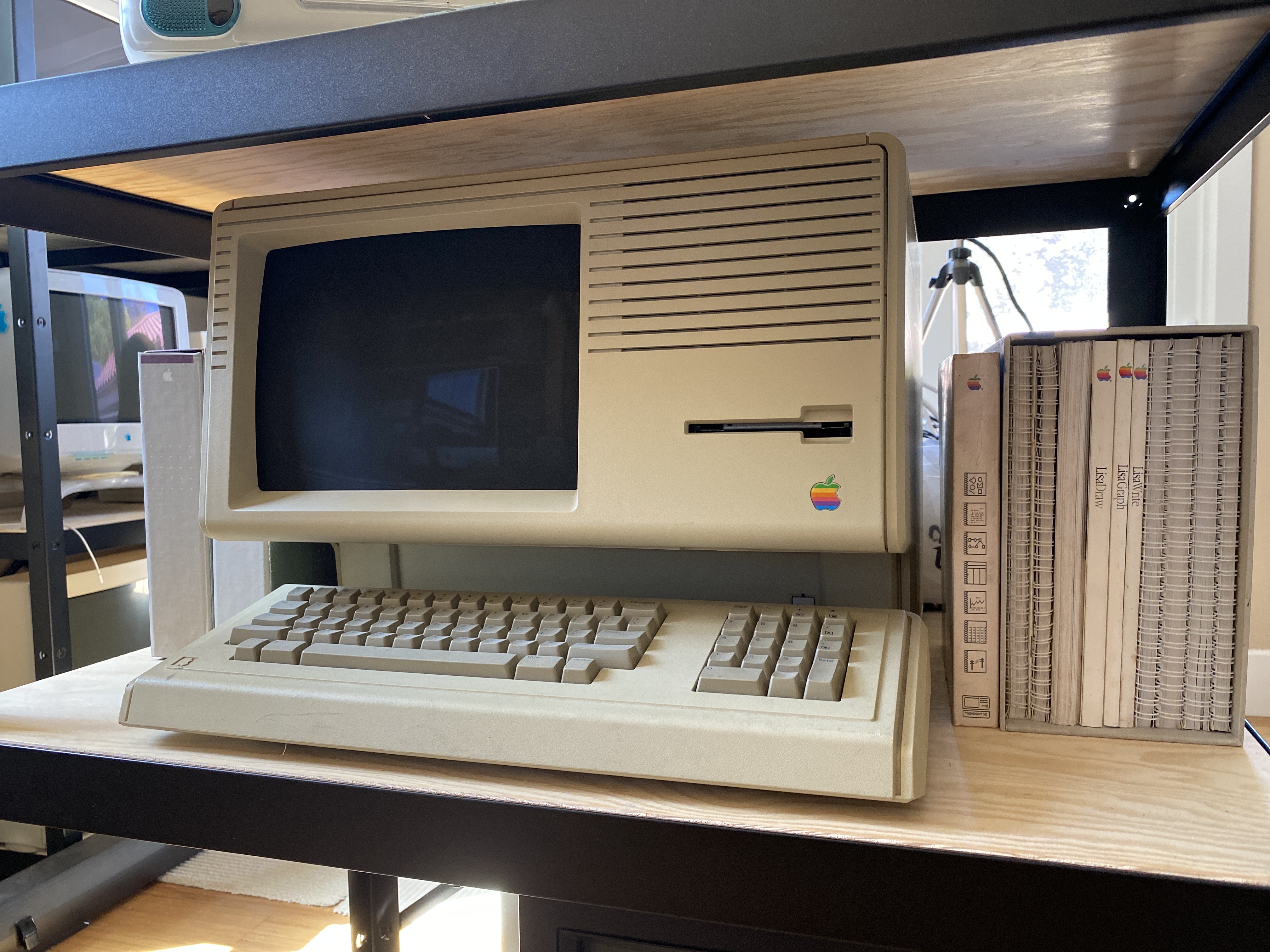
Apple Lisa 2 its above the NeXTstation.
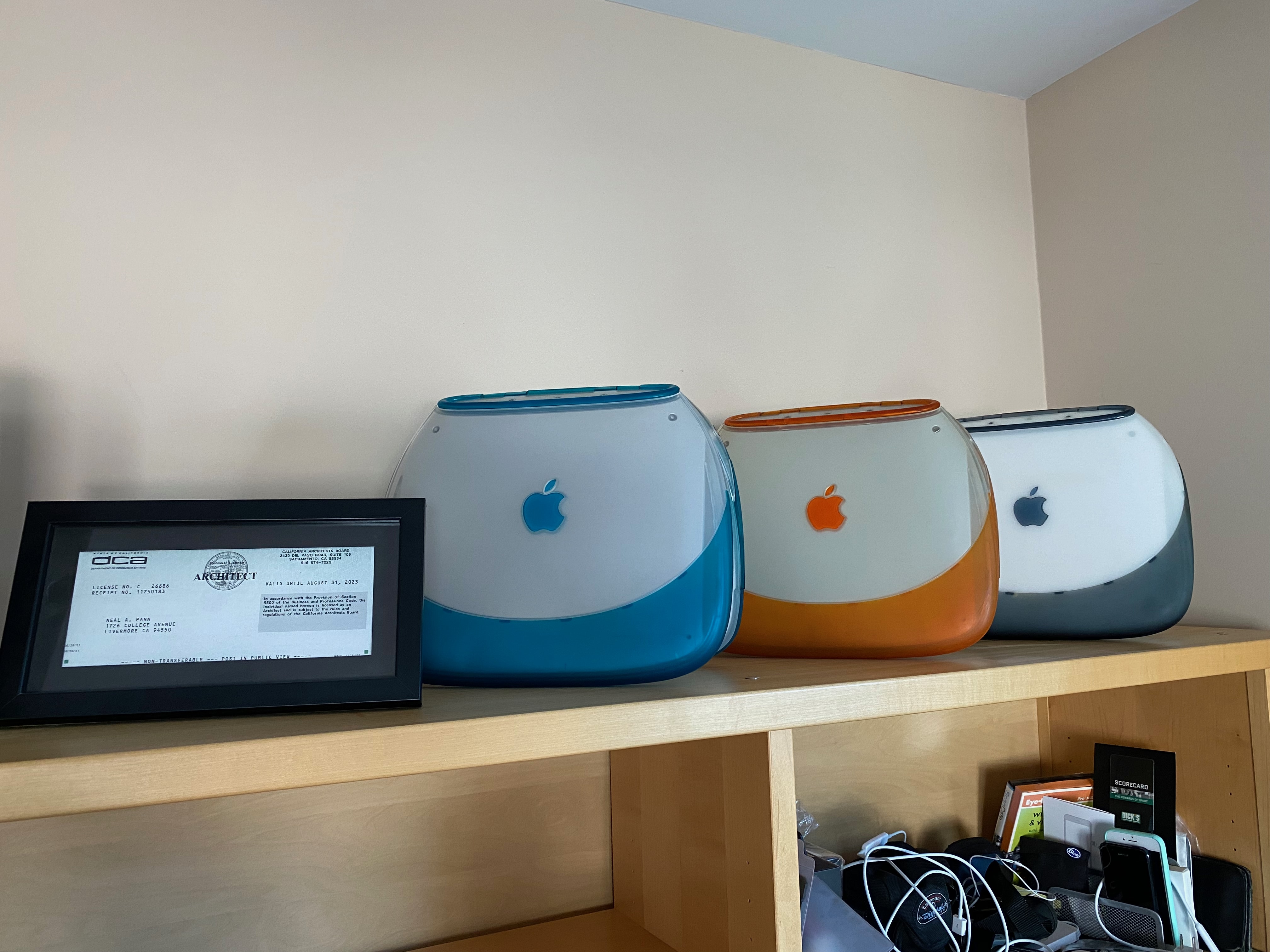
1998 iBooks in a range of colors.
Through his Inside The Apple Studio podcast and his online galleries, Pann created a space where architects could “relive a kind of nostalgia,” as he puts it. It wasn’t just about hardware specs; it was about the shared experience of “lusting after” a machine that promised a more elegant way to work. And it was also, as he puts it, a bit of fun to see how other Mac-using architects created their workspaces and what Apple tech they used to get their practice done, on both the hardware and software sides.
Conclusion: The Ultimate Personification
As we look toward the next 50 years, Pann asks a rhetorical question: Where does Apple go from here?
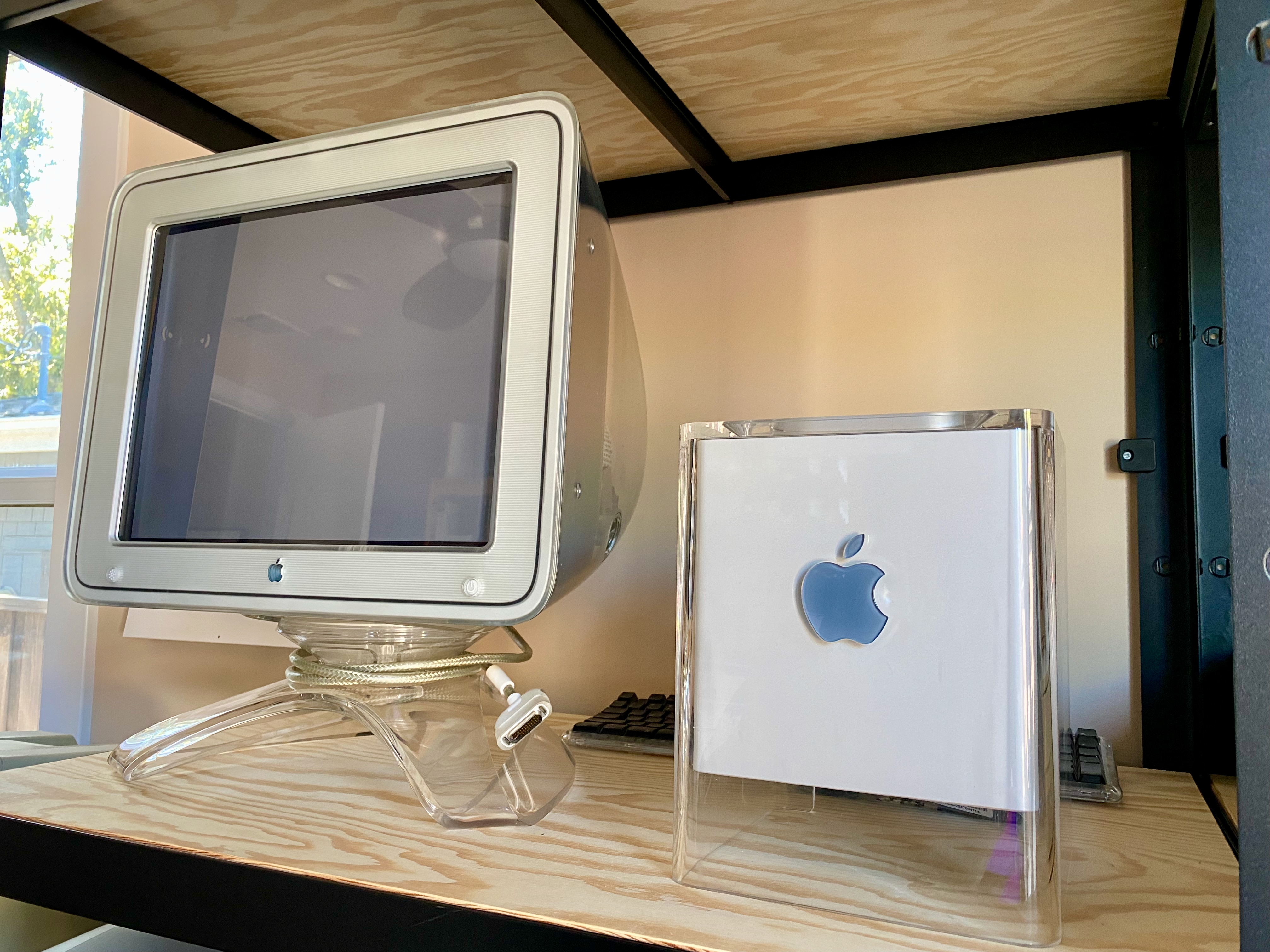
The Power Mac G4 Cube was Apple’s most stunning when released by Steve Jobs’ gorgeous creation was a market failure. It’s successor the ill-fated 2013 trash can Mac Pro in black.
His hope is for a return to the foundational ethos: “The Computer for the Rest of Us.” In Pann’s view, the iPhone is the ultimate personification of that goal—a device that democratizes complex technology through superior design. For the architectural community, Neal Pann remains a vital curator of that history, reminding us that the machines we use are not just appliances, but milestones in our own creative journeys.