Architectural rendering software companies realize that artificial intelligence (AI) technologies are making huge strides and altering the visualization workflows for AEC professionals. But one thing that will never change is the role storytelling plays to architects and other designers who need to convince stakeholders of the value of projects and moving forward with development and building plans. This applies to a custom single-family home as much as to new city-scale developments.
Cesium Integration
While readers on Architosh are likely aware of D5 Render as one of the newer, more exciting rendering solutions in the market, Cesium is likely not known. Cesium has earned a reputation as a powerhouse in 3D geospatial streaming, capable of delivering massive terrain, imagery, photogrammetry, and even photorealistic city models, all because of its open 3D Tiles standard.
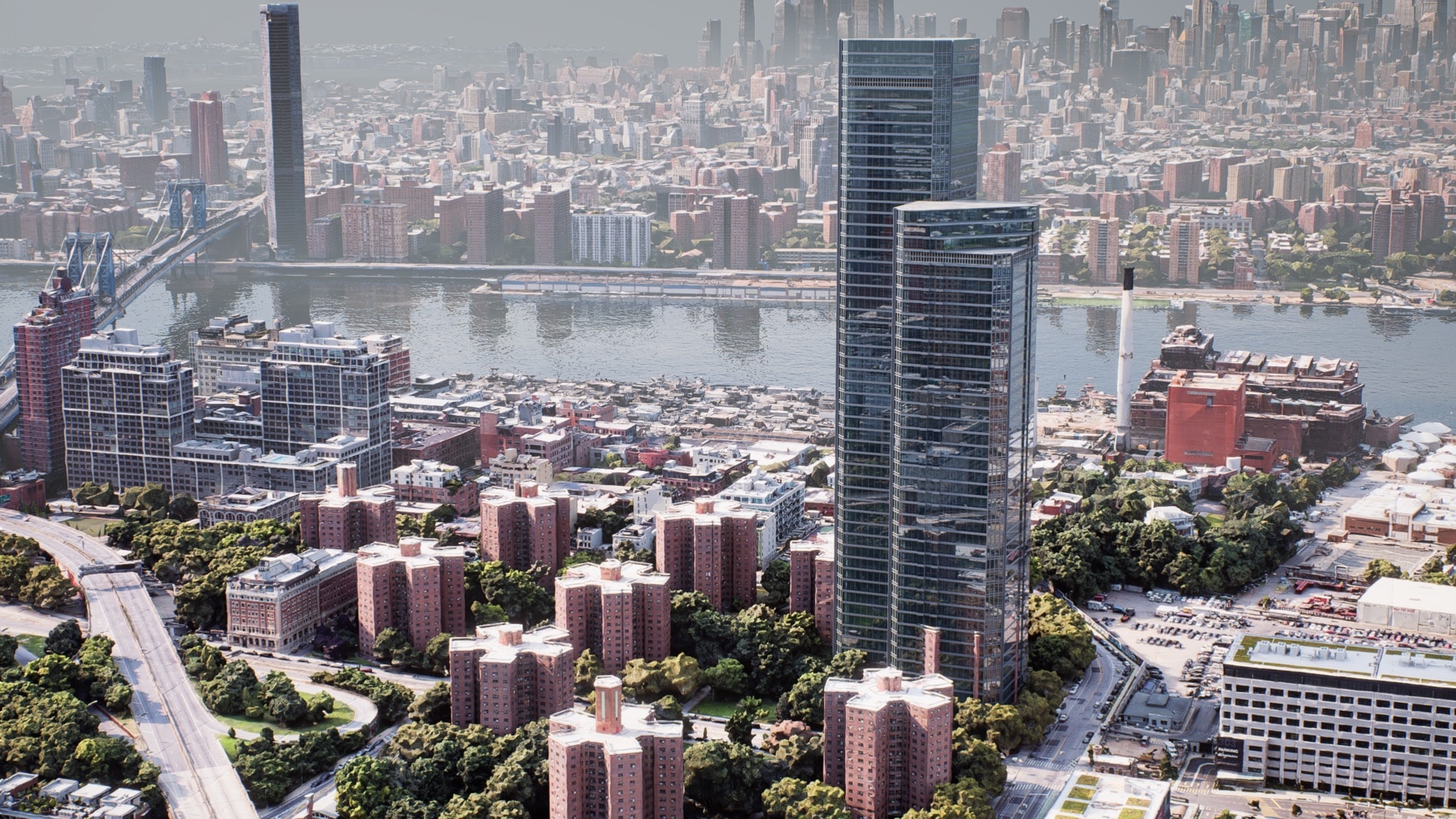
Cesium integration with D5 Render, bringing geospatial streaming of terrain and imagery into every D5 Render scene.
At the same time, D5 Render has carved out its niche as one of the top choices for real-time, cinematic-quality path-traced rendering. At the recent AIA25 conference in Boston, the D5 booth was one of the busiest as architects from around the United States enjoyed learning about its capabilities. Now the power of Cesium and the popularity of D5 Render meet. Users can now stream high-fidelity geospatial data straight into D5 with no difficult and time-consuming alignment and reference models. This brings the incredible context into rendered scenes like never before.
From Site to Skyline
The thing that makes this integration special is its seamless scalability, which allows users to view site details with zoomed-in detail or enjoy bird’s-eye city views. Regardless of how far in or out you are in the scene, a single building is placed precisely on its terrain, flanked by actual streets, neighboring structures, and natural topography. This eliminates the time-consuming effort to build in stand-in assets for a project’s 3D context.

From distant birdy’s eye views to zoomed in detail, Cesium’s geospatial streaming technology has earned the company powerhouse status in the visualization and geospatial market.
With Cesium and D5 Render, district-level planning and visualization becomes vastly streamlined, while urban campuses, mixed-use zones, and transportation hubs can be visualized as a cohesive whole. As you back out whole cities can come into view. And thanks to Cesium’s scalable datasets, detail holds firm even at sweeping distances. The result is a new kind of architectural storytelling—visually rich, emotionally resonant, and grounded in the scale of reality you would like to see your project visualized in.
Real-World Use Cases
D5 Render says that the integration isn’t just an amazing technical achievement, it’s a workflow enhancer for today’s workflows across disciplines. Here’s a summary of what the rendering company is talking about:
- Daylight and Shadow Studies: With real terrain and topography in play, teams can demonstrate how buildings cast light and shadow across real streets and spaces, throughout seasons and times of day.
- District Planning and Urban Design: Massing, density, and phasing strategies come to life in real-world contexts, giving planners and cities a faster path to decision-making.
- Real Estate and Community Engagement: Renderings grounded in familiar landscapes build trust and clarity, helping the public and stakeholders understand impact at a glance.
- Education and Research: Urban design studios and architecture programs can shortcut weeks of GIS prep, replacing it with a direct, visual-first approach to site analysis.
At the core of all these example scenarios include simply better communication, faster approvals and a more accurate and intuitive grasp of design intent.
Performance, Vision, Action
Performance
Technically, behind the scenes, the Cesium integration is powered by the company’s 3D Tiles technology, an open standard Cesium created for efficient, high-fidelity streaming. Even the largest datasets, including photogrammetric city models, remain highly responsive within D5 Render, with zero need for heavy preprocessing or sacrifices in visual quality.
Users setup a Cesium access token through D5 for Teams, and then users can instantly start streaming terrain, imagery, and detailed city tiles—no GIS background required.
Vision
Both companies see this partnership as representational of a shift in the world of how architecture and geospatial intelligence work together. It marks a change in vision of how AEC visualization workflows get achieved.
“By bringing Cesium’s real-world data into D5, we’re giving architects a new lens to tell their stories—one that scales from a building to an entire city,” said a D5 Render spokesperson. “This isn’t just about visualization—it’s about designing with context, clarity, and confidence.”
Action
Users can deploy the Cesium integration today as it is now available in D5 Render 2.11 as part of D5 Render for Teams. Those users can get started simply, by connecting a Cesium account, stream in the datasets you need and begin placing your designs into their real-world contexts.
To learn more about Cesium visit them here. To learn more about the Cesium integration with D5 Render visit here.