It looks like Intel is ahead of schedule on its Intel 18A node chip manufacturing process, with its CEO Lip-Bu Tan saying Intel 18A is in high production. The new Panther Lake chips are built on an advanced chip manufacturing node roughly equivalent to TSMC’s world-leading chip-making capabilities.
The Chips
The Intel Core Ultra Series (Panther Lake) processors deliver up to 60% better multithreaded performance and 77% faster gaming performance compared to previous generations. But the real thrust of the improvements is the energy efficiency. And this news has sent Intel’s stock surging over 6% yesterday as the company discussed the technicals of Panther Lake.
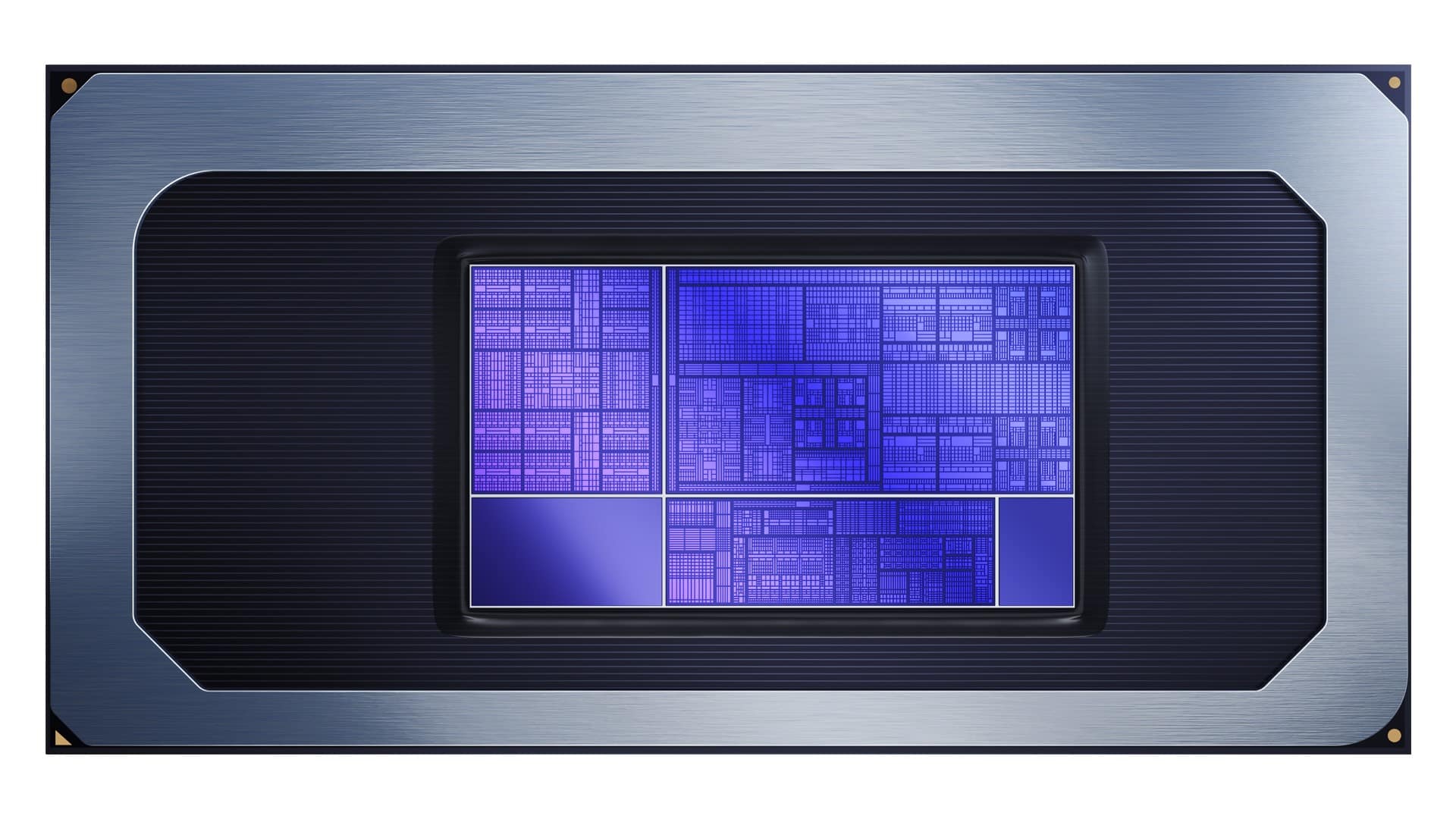
A chip die shot of Intel Core Ultra Series 3 (Panther Lake). This latest processor series delivers dramatic raw performance and power-per-watt improvements over Intel’s previous generation. They are fundamentally bringing desktop-class performance to mobile computing and are aimed at competing with ARM-class processors from Apple and Qualcomm.
In terms of products in the Core Ultra Series 3 these include:
- Core Ultra X9 388H — The flagship processor, which is approximately 19% faster than the previous generation Core Ultra 9 285H, and is designed to compete with top-tier mobile chips from AMD, Apple, and Qualcomm.
- Core Ultra 9 386H — There are incremental gains over previous 16-core mobile models from Intel
- Core Ultra 7 365 — Similar single-core performance to current AMD Ryzen AI 7 350
- Core Ultra 3 205 — 30% higher multicore than Core i3-14100
AI performance is at the center of the story around Panther Lake, with Intel claiming leadership performance in the Geekbench AI test suite, with the NPU chip component yielding 50 TOPS, which will allow the computer to run local AI tasks significantly faster than competing chips from AMD and Qualcomm.
Panther Lake Architecture
As we noted in our recent feature (see Architosh, “End of an Era: How Silicon Will Decide BIM’s Future,” 24 December 2025), Intel’s chip architectural strategy has increasingly followed the heterogeneous compute paradigm established by ARM architecture chip makers like Apple and Qualcomm. This means the chip is a mixture of different types of computing units and cores.
Panther Lake architecture includes new next-generation P-cores (which are your snappy and responsive experience performance cores), plus next-gen E-cores (which drive multithreaded performance and parallelism) and new LP-E cores (which focus on energy-efficient compute, like everyday tasks such as email). These cores come in a 4+8+4 configuration, delivering a total 16-core chip with very notable multicore performance improvements.
Panther Lake also features a new NPU (neural processing unit) with NPU 5 Architecture delivering up to 50 TOPS across the stack, putting Intel very near if not at the very top of AI on-chip compute. Additionally, the new Intel Core Ultra Series 3 processors can optionally contain a built-in Intel Arc GPU for advanced graphics.
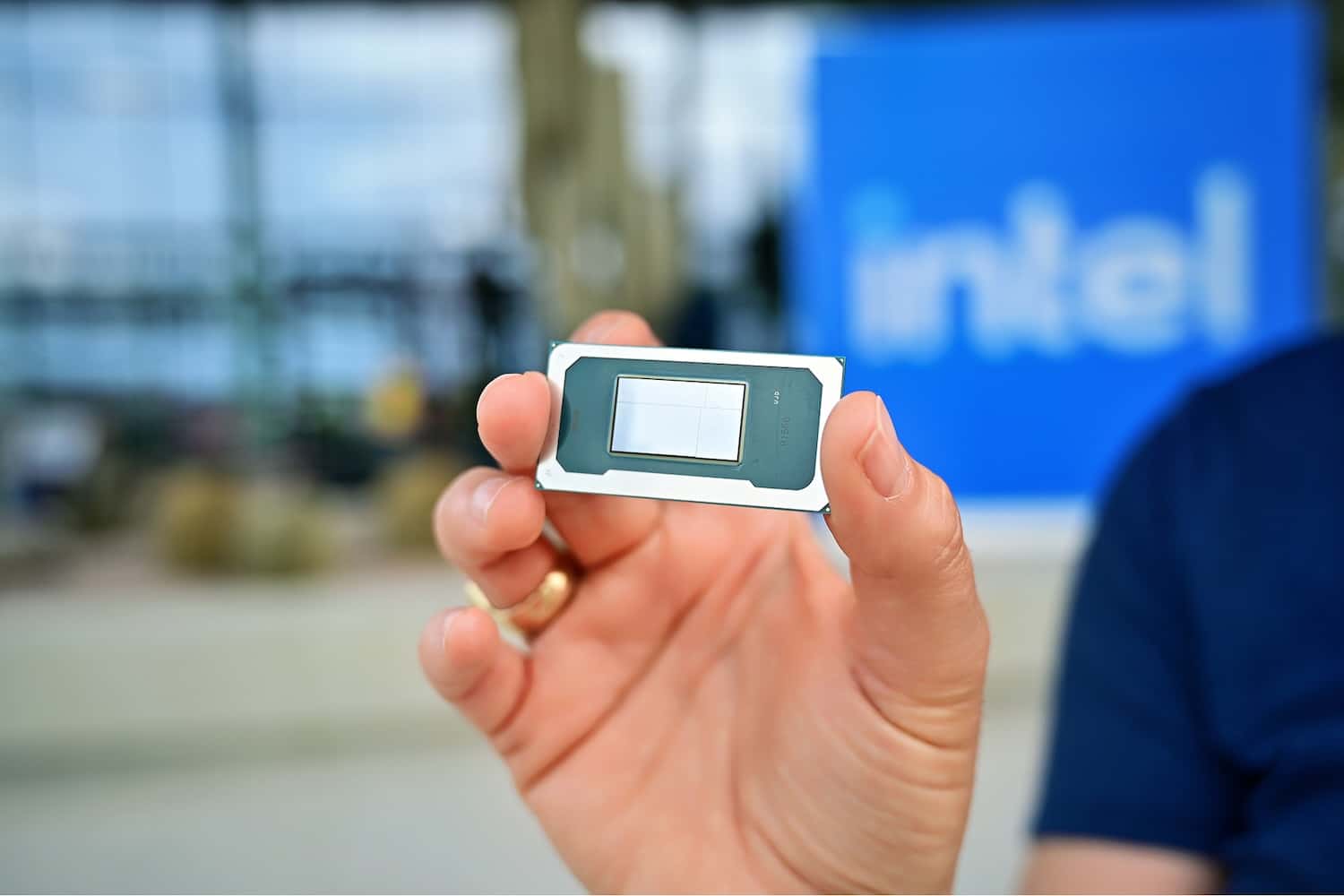
This image shows the entire chip package (not just the processor itself). The new Panther Lake generation features a multi-die (chiplet) architecture with a modular Tile design. Intel uses Feveros 3D packaging to stack several specialized silicon tiles on a single base. The flagship processor, Core Ultra X9, features a much larger Intel Arc B390 GPU tile with 12 Xe3 cores, which is a 50% increase in graphics hardware over the previous generation.
Unlike the previous generation Lunar Lake, Panther Lake goes back to placing the memory on the motherboard (not integrated). Lunar Lake memory on package (MoP) chip design emulating Apple’s on-chip integrated memory, but ex-CEO Pat Gelsinger was noted as saying that direction was a mistake because it limits customer configuration flexibility. This has been noted about Apple’s M-series as well, and is one of the few remaining reasons against Apple targeting workstation computing markets more successfully, where memory far above 128GB is now possible.
The Ultra X9, Ultra 9, and Ultra 7 (Panther Lake) can have a maximum memory of 96 GB (LPDDR5x) or 128 GB (DDR5). This far exceeds 48 GB of unified memory in Apple’s flagship MacBook Pro.
Battery Power
Panther Lake was designed with PowerVie technology, which is specifically aimed at addressing the “performance cliff” that was common to older x86 laptops when unplugged. This is an area where Intel and AMD have an uphill battle with Apple Silicon, which is designed to deliver an identical performance whether unplugged or plugged. Still, Panther Lake is specifically designed to narrow this performance gap and also deliver much longer battery life, up to 27 hours, says Intel.
Thanks to Intel PowerVie’s backside power delivery architecture, Panther Lake reduces IR (voltage) drop, allowing the chip to sustain higher clock speeds at lower voltages, eliminating (mostly) the need to cycle down clocks to conserve power when unplugged. It still cycles down, but just not as aggressively as previous Intel chips did.
Just like Apple, Intel Panther Lake uses a “low power island” for background tasks, which means the high-performance (and energy-consuming) performance cores (P-cores) stay dormant until they are truly needed. Apparently, this will help Panther Lake be “bursty” even on battery, like Apple Silicon can. As we discussed at length in our feature on silicon and BIM, “burstyness” is a standard feature of CAD, BIM, and 3D modeling applications. So bursty performance means “snappy” application interactions.
The 60% percent improvement when working in multithreaded workloads is a very meaningful improvement profesional users in a range of industries.
For more information, visit here.
Architosh Analysis and Commentary
Panther Lake for CAD and 3D Pros
While Intel is a long way off from regaining the single-core performance crown from Apple—and we know how much CAD and BIM work is necessarily single-threaded—these new chips offer CAD professionals a big boost over previous-generation equipment. And the Intel Core Ultra X9 (the flagship Panther Lake chip) essentially matches Apple’s latest M5 in Geekbench 6.5 multicore scores (17,687 ± versus 17,862 ± / Intel to Apple).
This means that when working in CPU-generated rendered viewports, the multicore performance of that rendering work should be roughly equal. However, when moving around, doing modeling, model reconstruction, model manipulation, and general UI responsiveness, single-threaded speed is king. And from that vantage point, Intel has more work cut out for itself if it wants to catch up to Apple.
Other benefits for CAD pros include sustained performance with PowerVie when untethered. Then there is the graphics with Panther Lake’s Intel Xe3 integrated GPU tech. A reported 3DMark Time Spy test shows the Core Ultra X9 (Xe3) scoring 6,300 versus an estimated translation of 4,800 for the M5. This score of 6,300 is a landmark for a mobile PC processor and surpasses the average score of a mobile Nvidia RTX 3050. As we noted in our recent review of the Intel Arc Pro B50 GPU for workstations, Intel has some real chops to display, with the Intel Arc PRO B50 outperforming the comparable Nvidia RTX A1000 in performance per dollar (Geekbench 6 GPU/USD).
The bottom line is that Panther Lake looks to be a big success (and also a redeeming manufacturing success for Intel) and will lead to many new thin, lightweight professional laptops that pro users on Windows will certainly enjoy. With battery life supposedly up to 27 hours, this chip should greatly boost unthethered CAD/BIM industry performance in the field.